| # | key | jpg | json | txt |
|---|
1
|
001640030
|
|
{
  "sample_id": "001640030",
  "url": "https://pd12m.s3.us-west-2.amazonaws.com/images/8c92dc03-06ae-5174-a4af-74db96b10d77.png",
  "key": "001640030",
  "status": "success",
  "width": 1054,
  "height": 342,
  "original_width": 1054,
  "original_height": 342,
  "sha256": "e691730cb189df1e260613f0e86af6148364c5a037efdbe18cf82a947ade8b40",
  "source_shard": "00164.tar",
  "source_tar": "/capstor/store/cscs/swissai/infra01/vision-datasets/hf___Spawning___pd12m-full/00164.tar"
}
|
This is a high-contrast, black-and-white image depicting a stylized, panoramic landscape, likely a woodcut or engraving. The entire scene is enclosed within a thick, rough rectangular border. The composition is horizontally oriented and divided into three distinct horizontal bands: a sky, a middle ground with buildings and trees, and a foreground with decorative panels.

The top section represents the sky. On the far right, a large, stylized sun is depicted with a circular face featuring two dots for eyes and a curved line for a mouth. Radiating lines extend outward from the sun, filling the upper right corner. The rest of the sky is filled with dark, cloud-like shapes that stretch across the top of the frame.

The middle ground features a row of structures and vegetation. On the left side, there is a cluster of four trees with dense, rounded canopies and straight trunks. To the right of these trees stand three prominent, multi-story buildings. These structures are rectangular with pitched roofs and feature rows of small, dark squares representing windows. The buildings are arranged in a slight curve or perspective, receding slightly towards the right. Further to the right, another group of smaller, less detailed trees and bushes is visible.

The bottom section consists of a series of rectangular panels or plaques arranged horizontally across the width of the image. These panels contain various patterns and symbols. From left to right, the first panel has a grid-like pattern. The second panel contains a shape resembling a shield or crest. The third panel features vertical stripes. The fourth panel displays a more complex, possibly heraldic design. The fifth panel has a pattern of vertical lines. The sixth panel shows a shape similar to a shield or banner. The seventh panel contains a grid pattern. The final panel on the far right has a pattern of diagonal lines. The overall style is graphic and illustrative, with bold lines and stark contrasts between the black ink and the white background.
|
2
|
001640017
|
|
{
  "sample_id": "001640017",
  "url": "https://pd12m.s3.us-west-2.amazonaws.com/images/d3222e74-3b12-5703-887d-e7d4dfedaf92.png",
  "key": "001640017",
  "status": "success",
  "width": 1480,
  "height": 625,
  "original_width": 1480,
  "original_height": 625,
  "sha256": "7b1e524466237142c636a9bdc686a6209065fe3275ca582bdfef42839c1a697d",
  "source_shard": "00164.tar",
  "source_tar": "/capstor/store/cscs/swissai/infra01/vision-datasets/hf___Spawning___pd12m-full/00164.tar"
}
|
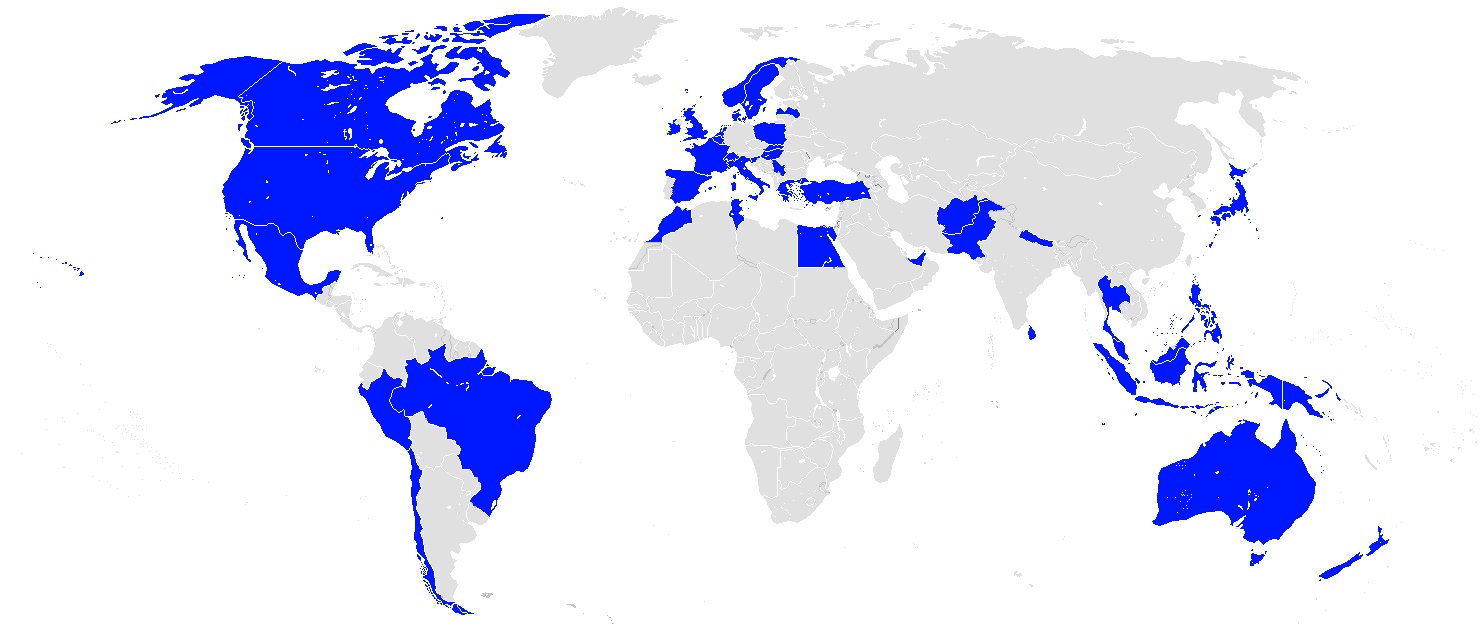
The image displays a world map rendered in a minimalist, digital style against a stark white background. The continents are depicted in a light gray color, with thin white lines delineating the borders of individual countries. Superimposed on this base map are numerous countries highlighted in a solid, vibrant royal blue. These blue-highlighted nations are scattered across all inhabited continents, creating a distinct visual pattern.

In North America, the entire continent is colored blue, encompassing Canada, the United States, and Mexico. In South America, the blue highlighting covers Brazil, Argentina, and Chile, while the rest of the continent remains gray. Moving to Europe, a significant portion of the continent is blue, including the United Kingdom, France, Spain, Italy, Germany, and the Scandinavian countries, though some Eastern European nations remain gray. In Africa, only Egypt is highlighted in blue. The Middle East features blue highlights for Turkey, Iran, and Israel. In Asia, Japan is colored blue, along with Thailand, Vietnam, and the Philippines. Australia and New Zealand are also highlighted in blue. The map lacks any text, labels, or legends, focusing solely on the geographical distribution of the selected countries through color contrast. The lighting is flat and even, typical of a digital graphic, with no shadows or gradients, emphasizing the clean lines and solid colors.
|
3
|
001640056
|
|
{
  "sample_id": "001640056",
  "url": "https://pd12m.s3.us-west-2.amazonaws.com/images/e5a191bb-45c3-574d-bbb2-bb6d32afa17f.png",
  "key": "001640056",
  "status": "success",
  "width": 477,
  "height": 454,
  "original_width": 477,
  "original_height": 454,
  "sha256": "2a36fcaf93bebb975ebc700fe0326a121f2064462d21071ce1c425377f7c6428",
  "source_shard": "00164.tar",
  "source_tar": "/capstor/store/cscs/swissai/infra01/vision-datasets/hf___Spawning___pd12m-full/00164.tar"
}
|
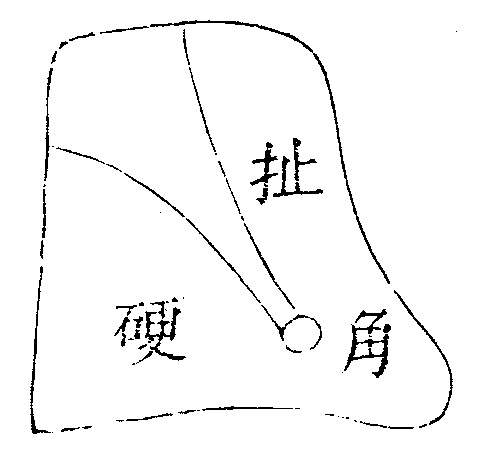
The image presents a simple, hand-drawn line sketch on a plain white background. The central subject is an irregularly shaped outline, resembling a rough, freehand drawing of a piece of fabric or a patch of material. This outline is defined by a single, continuous, slightly wavy black line that forms its perimeter. Inside this boundary, the interior is divided into three distinct sections by two curved lines that originate from the upper left area and extend downwards towards the lower right. The first dividing line curves gently from the top edge down towards the center-right, while the second line arcs more sharply from the left side, meeting the first line near the bottom right corner. Within these sections, three Chinese characters are inscribed in a traditional calligraphic style. The character "扯" (chě), meaning to pull or tear, is located in the upper right section. The character "硬" (yìng), meaning hard or stiff, is positioned in the lower left section. The character "角" (jiǎo), meaning corner or angle, is situated in the lower right section, adjacent to where the two dividing lines converge. A small, unfilled circle is drawn at the point where the two internal lines meet near the bottom right. The overall style is minimalist and schematic, resembling a diagram or a technical illustration, with no shading, color, or texture beyond the black ink lines against the stark white void.
|
4
|
001640002
|
|
{
  "sample_id": "001640002",
  "url": "https://pd12m.s3.us-west-2.amazonaws.com/images/3dfe1cdf-a319-57e9-86e7-4521715aadd7.jpeg",
  "key": "001640002",
  "status": "success",
  "width": 480,
  "height": 354,
  "original_width": 480,
  "original_height": 354,
  "sha256": "75c7f4209d9efe596f4fa85367790ac4e691c45653f4a2cf0d0616c842a1af8b",
  "source_shard": "00164.tar",
  "source_tar": "/capstor/store/cscs/swissai/infra01/vision-datasets/hf___Spawning___pd12m-full/00164.tar"
}
|
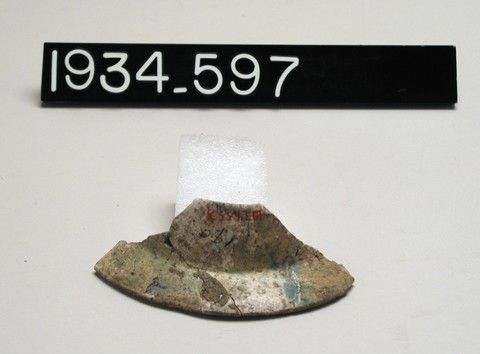
A fragment of a ceramic vessel rests centrally on a plain, off-white surface, positioned directly beneath a black rectangular label. The ceramic piece is broken, displaying a curved, semi-circular profile that suggests it was once part of a larger bowl or plate. Its surface is heavily textured and weathered, exhibiting a mottled palette of earthy tones including beige, light brown, and patches of faded green and grey. A distinct, lighter-colored, possibly glazed or calcified area is visible on the upper right portion of the fragment. Behind the ceramic shard, a small, white, rectangular block of material, likely foam or plastic, is placed for support or display. The black label above the artifact features the white, sans-serif text "1934.597" printed horizontally across its center. The lighting is even and diffuse, casting soft shadows and highlighting the rough texture of the pottery without creating harsh contrasts. The overall composition is simple and clinical, typical of an archaeological or museum catalog photograph intended for documentation.
|
5
|
001640050
|
|
{
  "sample_id": "001640050",
  "url": "https://pd12m.s3.us-west-2.amazonaws.com/images/b9219cc2-0525-5e56-bba1-2bcf371ffe3b.png",
  "key": "001640050",
  "status": "success",
  "width": 735,
  "height": 589,
  "original_width": 735,
  "original_height": 589,
  "sha256": "cb9f577c8e92264af5e01c0595916b004ac961d10ddba51e3290c9d8895b35ea",
  "source_shard": "00164.tar",
  "source_tar": "/capstor/store/cscs/swissai/infra01/vision-datasets/hf___Spawning___pd12m-full/00164.tar"
}
|
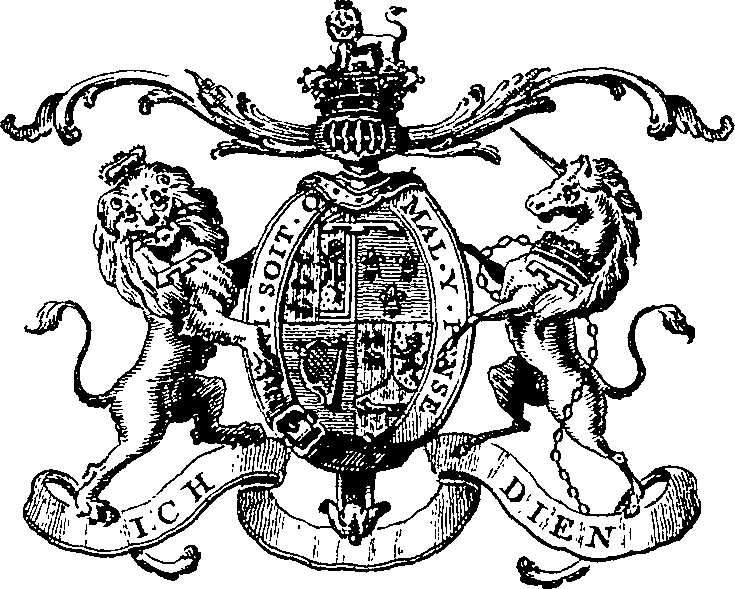
This is a black and white line drawing, executed in a style reminiscent of an engraving or woodcut, depicting a complex and ornate coat of arms. The central focus is a shield, which is quartered, meaning it is divided into four distinct sections by a cross. The top-left quadrant displays a field of horizontal stripes, known as fessy, with a small, indistinct figure standing upon it. The top-right quadrant features a field of vertical stripes, or paly, with a small, dark, possibly animal-like shape in the center. The bottom-left quadrant contains a large, dark, somewhat amorphous shape, perhaps a heart or a shield itself, set against a lighter background. The bottom-right quadrant shows a field of diagonal stripes, or bendy, with a small, dark, possibly bird-like figure.

Surrounding the shield is a decorative wreath or torse, composed of twisted ribbons. Flanking the shield are two supporters. On the left stands a lion rampant, its body rearing up on its hind legs, facing towards the right. It has a full mane and a detailed tail. On the right stands a unicorn rampant, also rearing up on its hind legs, facing towards the left. The unicorn is depicted with a single horn on its forehead and a chain attached to its neck, which drapes down its body. Above the shield sits a crown, which appears to be a coronet or a stylized royal crown, topped with a small, indistinct figure, possibly a lion or a similar beast. Extending from the crown are two elaborate, scroll-like flourishes that curve outwards and upwards, framing the top of the composition.

Below the shield, a ribbon or scroll unfurls, bearing the Latin motto "ICH DIEN". The text is arranged with "ICH" on the left side of the ribbon and "DIEN" on the right side. The entire image is rendered in high contrast, with solid black lines and shading against a stark white background, creating a graphic and formal appearance. The style suggests a historical or heraldic document, emphasizing the symbolic and decorative elements of the coat of arms.
|
6
|
001640038
|
|
{
  "sample_id": "001640038",
  "url": "https://pd12m.s3.us-west-2.amazonaws.com/images/3e2d4873-7eba-53d8-a15b-31cf59c8f4d3.png",
  "key": "001640038",
  "status": "success",
  "width": 853,
  "height": 471,
  "original_width": 853,
  "original_height": 471,
  "sha256": "20fd4a37203ccca9b2c7db1bc2b6cccfee47204084e479850d052c2cf65ecbb1",
  "source_shard": "00164.tar",
  "source_tar": "/capstor/store/cscs/swissai/infra01/vision-datasets/hf___Spawning___pd12m-full/00164.tar"
}
|
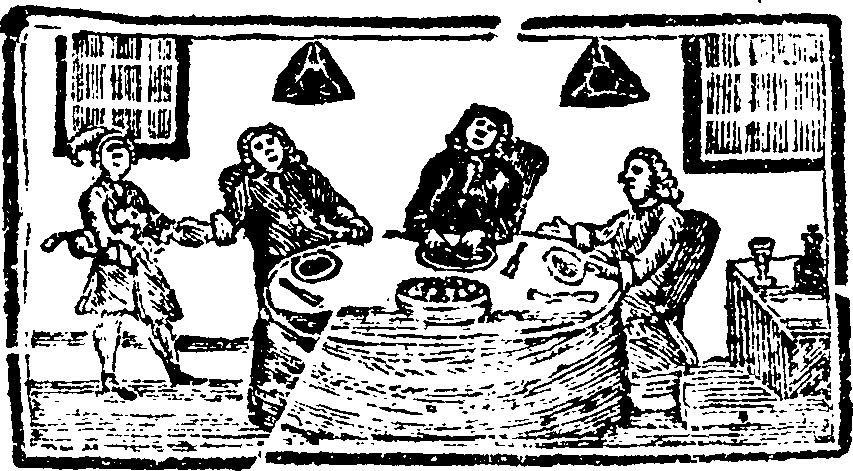
This is a black and white woodcut illustration depicting an indoor dining scene with four figures. The composition is framed by a thick, rough border. In the center, a large, round table dominates the foreground, covered with a tablecloth that has horizontal lines indicating folds. On the table, there are several items: a bowl in the center, a plate with what appears to be a slice of meat or bread, another plate, and a knife. To the right of the table, a small side table holds a glass and a bottle.

Four individuals are present. On the far left, a young boy stands facing right, holding a small animal, possibly a dog or a cat, in his arms. He wears a short tunic or dress with a ruffled collar and a cap. Next to him, a man with long, wavy hair stands at the table, leaning forward with his hands on the table's edge. He is dressed in a long coat or robe. Seated at the head of the table is another man with long hair, wearing a dark, high-collared garment. He is looking towards the standing man. On the right side of the table, a fourth man is seated, facing left, with his hands resting on the table. He wears a long coat and a cap.

The background features two windows, one on the left and one on the right, each with a grid pattern suggesting panes. Above the table, two triangular shapes hang from the ceiling, possibly representing lanterns or decorations. The style is characteristic of early modern woodcuts, with bold lines and minimal shading. There is no readable text in the image. The overall mood is one of a formal or semi-formal gathering, possibly a meal or a discussion.
|
7
|
001640018
|
|
{
  "sample_id": "001640018",
  "url": "https://pd12m.s3.us-west-2.amazonaws.com/images/196bd990-c946-5062-aa11-780072926325.png",
  "key": "001640018",
  "status": "success",
  "width": 963,
  "height": 447,
  "original_width": 963,
  "original_height": 447,
  "sha256": "7f01efac41bab0de20a36e57aebbaa2fd5c955d4f8158183d5e853cdade2a6b6",
  "source_shard": "00164.tar",
  "source_tar": "/capstor/store/cscs/swissai/infra01/vision-datasets/hf___Spawning___pd12m-full/00164.tar"
}
|
This image presents a highly ornate, black-and-white woodcut or engraving, likely serving as a decorative title page or frontispiece for a book. The composition is symmetrical and dense with intricate line work, characteristic of 17th or 18th-century printmaking. At the very center, positioned slightly below the vertical midpoint, are the capital letters "T O", which appear to be the beginning of a dedication, such as "TO [Name]". These letters are set against a white, arched background that cuts through the lower portion of the illustration.

Dominating the upper center is a large, classical urn or vase, resting on a pedestal. The urn features a bulbous body with vertical fluting and a wide mouth, from which a profusion of flowers and foliage spills outward, creating a lush, overflowing effect that forms the apex of the entire design. Flanking this central urn are two winged figures, possibly putti or cherubs, depicted in profile facing inward. The figure on the left appears to be holding a garland or branch, while the figure on the right mirrors this action. Their bodies are intertwined with the surrounding floral motifs.

The entire scene is framed by elaborate, scrolling acanthus leaves and vines that extend from the bottom corners upwards, creating a sense of enclosure. On the far left and right edges, there are tall, stylized trees or plants with dense foliage, adding to the verticality of the design. The overall style is Baroque or Rococo, emphasizing movement, complexity, and naturalistic detail rendered in stark black ink against a white background. The lighting is implied through the contrast of the black lines and white spaces, giving the image a flat but richly textured appearance.
|
8
|
001640044
|
|
{
  "sample_id": "001640044",
  "url": "https://pd12m.s3.us-west-2.amazonaws.com/images/5b56313f-4fe9-5345-89d9-4f4758d50ea9.png",
  "key": "001640044",
  "status": "success",
  "width": 1588,
  "height": 2407,
  "original_width": 1588,
  "original_height": 2407,
  "sha256": "174a8509985af93d960077f2b74bd62d4905212b964bf047dff9382ea0fdb43c",
  "source_shard": "00164.tar",
  "source_tar": "/capstor/store/cscs/swissai/infra01/vision-datasets/hf___Spawning___pd12m-full/00164.tar"
}
|
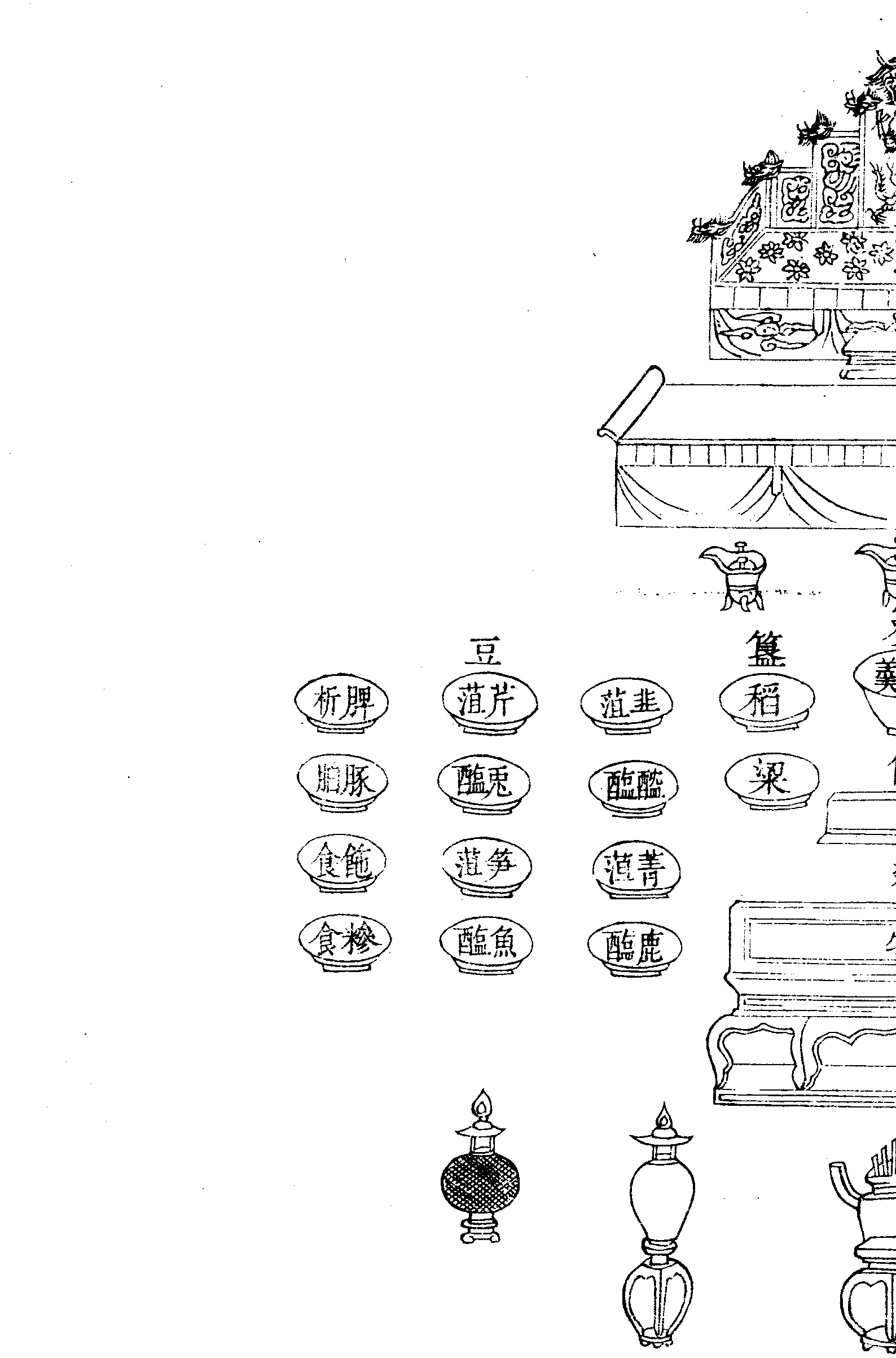
This black-and-white line drawing depicts a section of a traditional Chinese ritual or ceremonial arrangement, likely from a historical text or diagram. The composition is dominated by a grid of small, oval-shaped vessels arranged in three columns and four rows, each containing a specific food item or offering, with Chinese characters labeling the contents. Above this grid, two larger categories are indicated by the characters "豆" (dòu, meaning beans or grains) and "簠" (fǔ, a type of vessel). To the right of the grid, a portion of a larger, ornate structure is visible, featuring intricate carvings and floral motifs, possibly a stand or part of an altar. Below the grid, two distinct types of incense burners or lamps are illustrated: one with a textured, spherical body and another with a smooth, elongated form. The background is plain white, emphasizing the detailed linework of the objects. The style is reminiscent of traditional Chinese woodblock prints or ink drawings, characterized by clean lines and a lack of shading. The text within the oval vessels includes terms like "析胙" (xī zuò), "菹芹" (zū qín), "菹韭" (zū jiǔ), "稻" (dào, rice), "醢豚" (hǎi tún), "醢醢" (hǎi hǎi), "粱" (liáng, millet), "食餠" (shí bǐng), "菹笋" (zū sǔn), "菹菁" (zū jīng), "食糝" (shí sǎn), "醢魚" (hǎi yú), and "醢鹿" (hǎi lù), each representing different types of food offerings. The overall atmosphere is one of solemnity and ritualistic precision, with a focus on the detailed representation of the items and their arrangement.
|
9
|
001640032
|
|
{
  "sample_id": "001640032",
  "url": "https://pd12m.s3.us-west-2.amazonaws.com/images/8656b627-f90d-5ccc-b3b4-57da5f30bc79.png",
  "key": "001640032",
  "status": "success",
  "width": 822,
  "height": 806,
  "original_width": 822,
  "original_height": 806,
  "sha256": "98dfd61cfc2a4a537cebc41dd337f39f459eeb60f644978d2c6bc74465de1f33",
  "source_shard": "00164.tar",
  "source_tar": "/capstor/store/cscs/swissai/infra01/vision-datasets/hf___Spawning___pd12m-full/00164.tar"
}
|
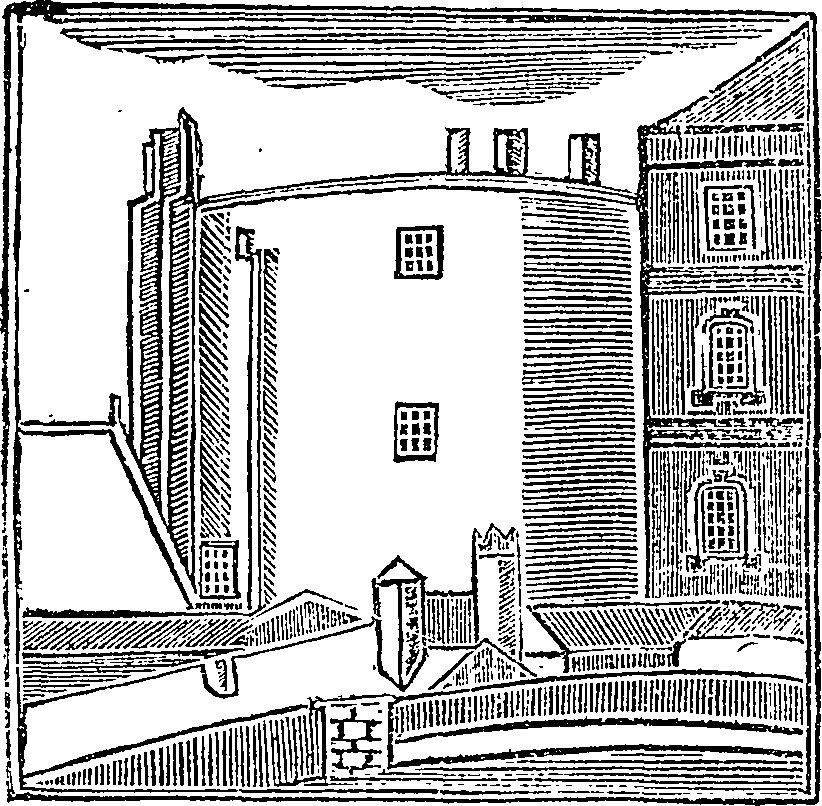
This black and white image is a woodcut or engraving depicting a fortified architectural complex, likely a castle or a large manor house, viewed from a slightly elevated perspective. The composition is dominated by a massive, cylindrical tower that occupies the center of the frame, its surface rendered with dense, horizontal hatching lines to suggest texture and shadow. This central tower features two small, square windows with grid-like panes, one positioned near the top and another lower down. To the left of this main tower stands a tall, rectangular structure, possibly a gatehouse or another section of the wall, characterized by vertical hatching and topped with crenellations. A smaller, pointed turret or lantern structure protrudes from the base of this left-hand building. On the right side of the image, a multi-story building with a gabled roofline is visible. This structure has three distinct levels, each featuring a window; the windows are rectangular with multiple panes, and the facade is detailed with vertical lines indicating masonry or siding. In the foreground, a low wall or fence runs horizontally across the bottom of the image, separating the viewer from the buildings. Behind this foreground element, a small, pointed-roof structure, perhaps a gate or a small tower, is situated in front of the central tower. The sky above is filled with horizontal lines, suggesting clouds or atmospheric effects. The entire scene is rendered in a monochromatic palette, relying on the contrast between the black ink and the white paper to create depth and form. There is no readable text within the image. The style is reminiscent of historical illustrations, with a focus on architectural details and a somewhat stylized representation of the structures.
|
10
|
001640020
|
|
{
  "sample_id": "001640020",
  "url": "https://pd12m.s3.us-west-2.amazonaws.com/images/bd45ff92-e2a1-56db-abe6-478ef8d6e437.png",
  "key": "001640020",
  "status": "success",
  "width": 1024,
  "height": 1024,
  "original_width": 1024,
  "original_height": 1024,
  "sha256": "cd213eca31f139f586cbf8267fed3b70edf34480661274d1a4bcca2bd8efbbd3",
  "source_shard": "00164.tar",
  "source_tar": "/capstor/store/cscs/swissai/infra01/vision-datasets/hf___Spawning___pd12m-full/00164.tar"
}
|
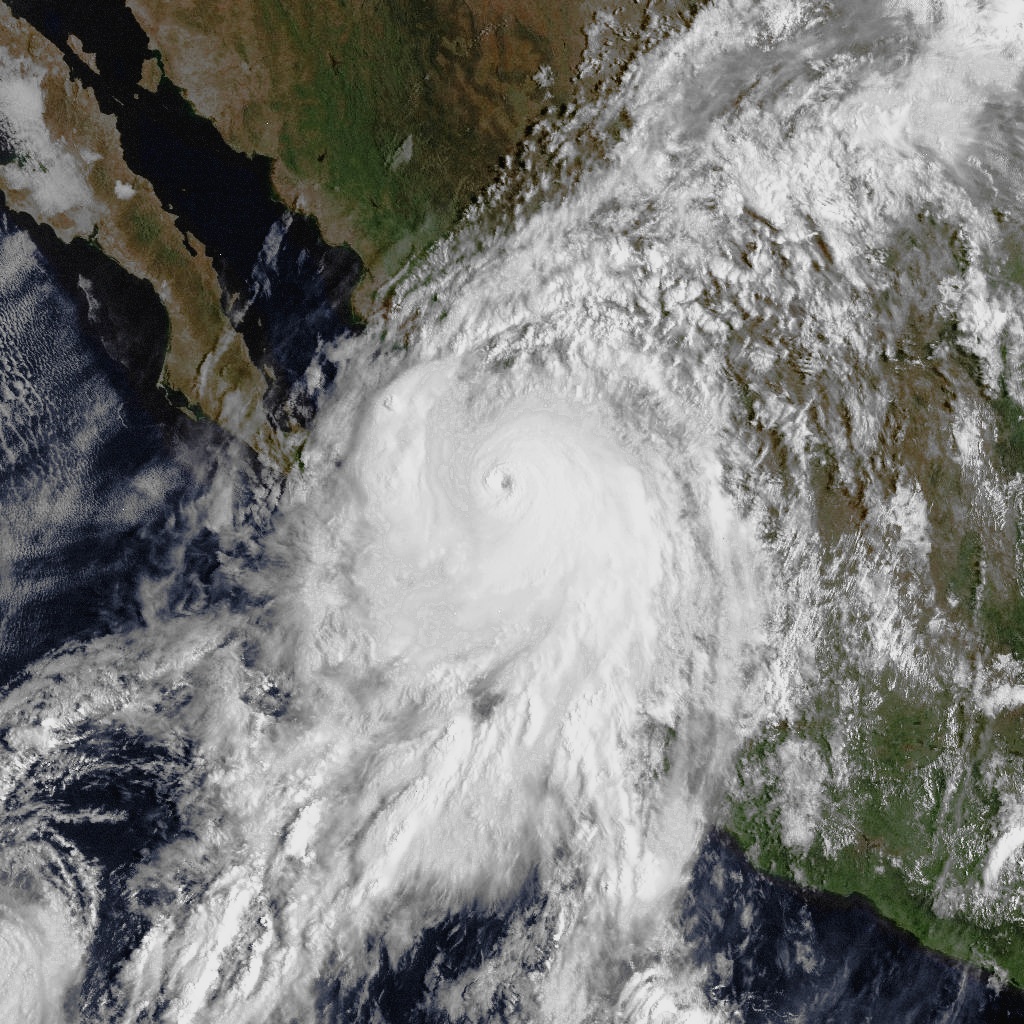
A satellite photograph captures a massive, well-defined tropical cyclone dominating the center of the frame, its structure spiraling inward toward a distinct, dark eye at its core. The storm's immense cloud mass is rendered in brilliant white and light gray, contrasting sharply with the deep, dark blue of the ocean waters that surround it. To the upper left, the landmass of the Baja California peninsula and the mainland coast of Mexico are visible, their terrain depicted in shades of brown and green, indicating arid and vegetated regions respectively. The coastline curves along the left side of the image, separating the land from the churning sea. The storm's outer bands stretch outwards, covering a vast expanse of the Pacific Ocean, with some cloud formations appearing to extend towards the right side of the frame, where more land, possibly the coast of Central America, is partially visible. The lighting suggests a daytime capture, with the sun illuminating the tops of the clouds, giving them a bright, almost glowing appearance against the darker ocean surface. The overall mood is one of immense power and natural force, as the cyclone appears to be in a state of active development or intensification. No text is present in the image.
|
11
|
001640012
|
|
{
  "sample_id": "001640012",
  "url": "https://pd12m.s3.us-west-2.amazonaws.com/images/b253e1b2-1655-5208-b9d8-45b340e5f67e.png",
  "key": "001640012",
  "status": "success",
  "width": 298,
  "height": 300,
  "original_width": 298,
  "original_height": 300,
  "sha256": "d6c506d55165db8aa303068171013640291d4b1ecd0bc4b81f8651a4a5b69468",
  "source_shard": "00164.tar",
  "source_tar": "/capstor/store/cscs/swissai/infra01/vision-datasets/hf___Spawning___pd12m-full/00164.tar"
}
|
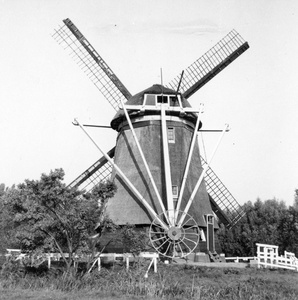
This black and white photograph captures a large, traditional windmill standing prominently in an open, grassy field. The windmill is the central subject, positioned slightly to the right of the image's center. It features a tall, cylindrical wooden body, or tower, which tapers slightly towards the top. The structure is crowned with a conical roof, beneath which sits the cap housing the mechanism for the sails. Four large, lattice-work sails extend from the cap, angled diagonally across the frame; two point upwards and outwards towards the top corners, while the other two point downwards and inwards towards the bottom corners. The sails are constructed with a grid-like pattern of thin wooden slats. A large, spoked wheel, likely part of the internal mechanism or a decorative element, is visible at the base of the tower, partially obscured by the foreground vegetation. The windmill is surrounded by a low, rustic wooden fence that runs along the bottom edge of the frame, separating the grassy foreground from the field. To the left of the windmill, a cluster of leafy trees and bushes adds depth to the scene. In the background, a line of dense trees stretches across the horizon, providing a natural backdrop. The sky above is a uniform, light gray, suggesting an overcast day. The overall composition is balanced, with the windmill dominating the frame. The image has a slightly grainy texture, characteristic of older photographic prints. There is no visible text within the image. The lighting is diffuse, casting soft shadows and highlighting the textures of the wood and foliage. The mood is serene and timeless, evoking a sense of rural tranquility.
|
12
|
001640016
|
|
{
  "sample_id": "001640016",
  "url": "https://pd12m.s3.us-west-2.amazonaws.com/images/d6f94a41-96e6-5561-808b-2ba969b3767c.png",
  "key": "001640016",
  "status": "success",
  "width": 950,
  "height": 887,
  "original_width": 950,
  "original_height": 887,
  "sha256": "072724560e214733d8824529941a4444f236fcea4f864ed175b65b61fbd1d637",
  "source_shard": "00164.tar",
  "source_tar": "/capstor/store/cscs/swissai/infra01/vision-datasets/hf___Spawning___pd12m-full/00164.tar"
}
|
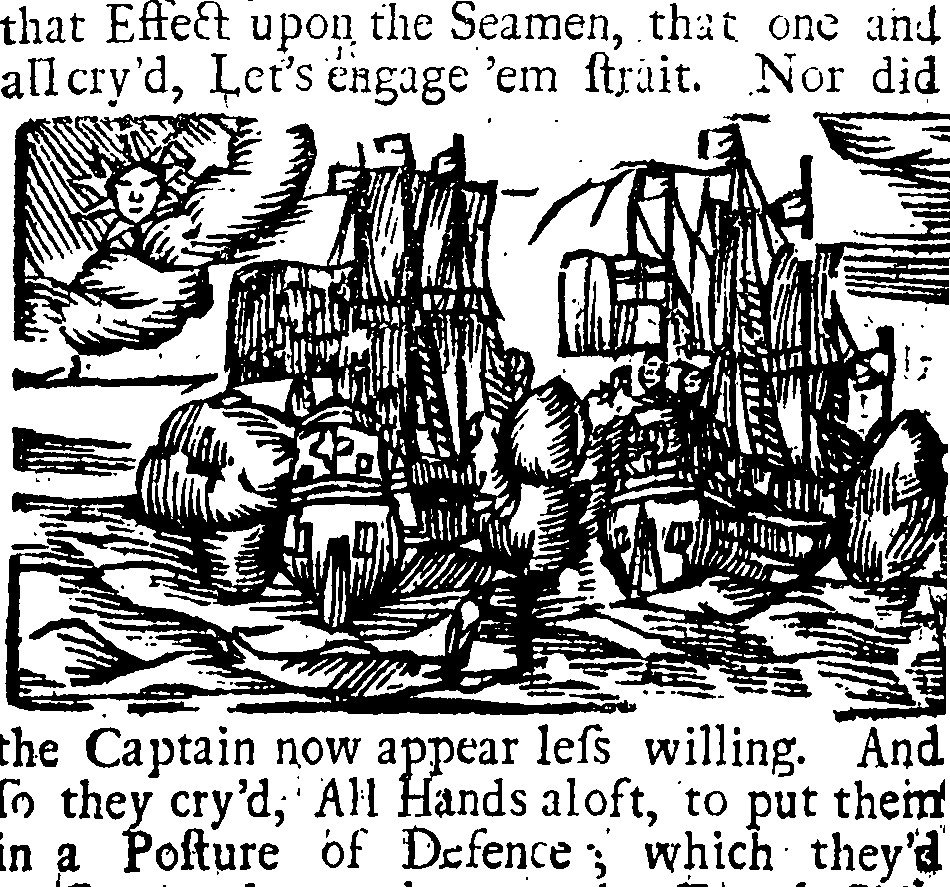
This image is a high-contrast, black-and-white woodcut illustration, likely from a historical publication, characterized by its stark lines and lack of color. The composition is divided into three distinct sections: text at the top, the central illustration, and text at the bottom.

At the top, a line of text in a serif typeface reads, "that Effect upon the Seamen, that one and all cry'd, Let's engage 'em Strait. Nor did". The text is printed in black ink against a white background.

The central illustration depicts a maritime scene featuring two sailing ships on a body of water. The ship on the left is shown in profile, facing right. It has a visible hull, a mast with rigging, and what appears to be a figurehead or a person's head at the prow, looking forward. The ship on the right is positioned slightly behind and to the right of the first ship. It also features a mast, rigging, and a hull. Between the two ships, there are several figures, possibly sailors, depicted in a stylized manner. The water is represented by horizontal lines, suggesting waves or the surface of the sea. The sky is plain white, with no clouds or other details. The overall style is reminiscent of 17th or 18th-century engravings, with a focus on the outlines and basic forms of the ships and figures.

At the bottom, another line of text in the same serif typeface reads, "the Captain now appear less willing. And so they cry'd, All Hands aloft, to put them in a Posture of Defence; which they'd". The text is printed in black ink against a white background.
|
13
|
001640036
|
|
{
  "sample_id": "001640036",
  "url": "https://pd12m.s3.us-west-2.amazonaws.com/images/0af5aa8c-9a5b-5fdf-af27-5f8bc0b5468b.png",
  "key": "001640036",
  "status": "success",
  "width": 1122,
  "height": 1161,
  "original_width": 1122,
  "original_height": 1161,
  "sha256": "6f3f0993e04b7c14192d3e7f48222d49adf4561b56dcb311a2b8074912b696c8",
  "source_shard": "00164.tar",
  "source_tar": "/capstor/store/cscs/swissai/infra01/vision-datasets/hf___Spawning___pd12m-full/00164.tar"
}
|
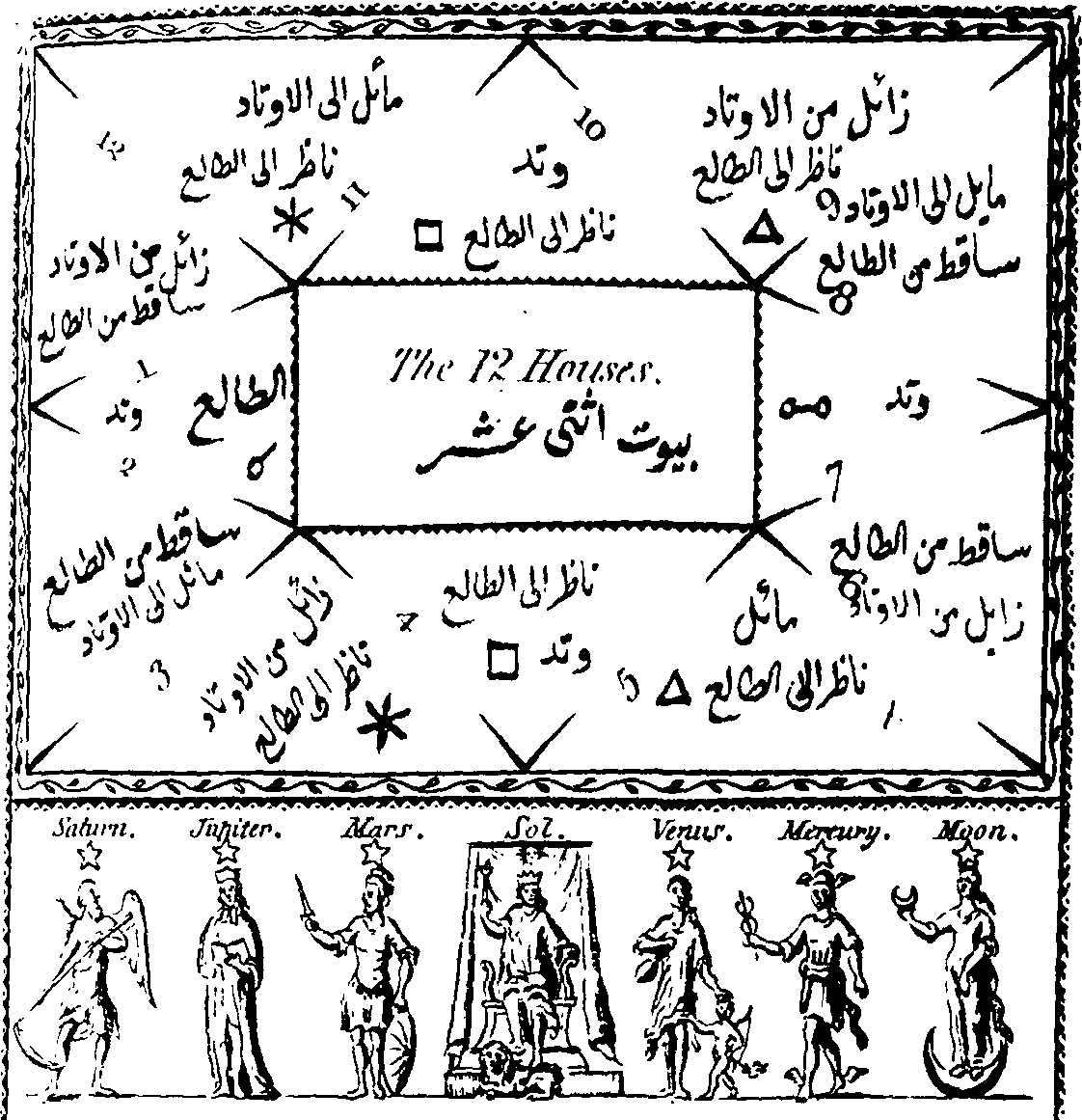
The image is a black-and-white woodcut illustration, likely from an early modern printed book, depicting an astrological chart and a row of planetary figures. The composition is divided into two distinct horizontal sections.

The upper, larger section features a large rectangle with a serrated or saw-toothed border, representing the "12 Houses" of astrology. This central box is surrounded by a larger, irregular frame. Inside the central box, the text "The 12 Houses." is printed in English in a serif typeface. Directly below this English text is a line of Arabic script reading "بيوت اثني عشر" (Baytun ithnay 'ashar), which translates to "Twelve Houses."

Surrounding this central box are various Arabic texts, numbers, and astrological symbols. The text appears to describe the positions of planets relative to the houses. For instance, in the top left corner, the text reads "مائل الى الاوتاد" (Mā'il ilā al-awtād), meaning "Inclined to the pillars," and "ناظر الى الطالع" (Nāẓir ilā al-ṭāliʿ), meaning "Looking at the ascendant." Other phrases include "زائل من الاوتاد" (Zā'il min al-awtād), meaning "Departing from the pillars," and "ساقط من الطالع" (Sāqiṭ min al-ṭāliʿ), meaning "Falling from the ascendant." The numbers 1 through 10 are visible in various positions around the box. Various geometric symbols, including stars, triangles, and squares, are interspersed with the text.

The lower section of the image displays a horizontal row of seven figures, each representing a celestial body. Above each figure is a label in Latin. From left to right, the figures are:

1.  **Saturn:** Labeled "Saturn." The figure is a winged man holding a scythe in his right hand and a staff in his left. He wears a tunic and a hat. Above his head is a star symbol.
2.  **Jupiter:** Labeled "Jupiter." The figure is a robed man wearing a crown and holding a scepter. Above his head is a star symbol.
3.  **Mars:** Labeled "Mars." The figure is a muscular man holding a sword in his right hand and a shield in his left. He wears a helmet and a short tunic. Above his head is a star symbol.
4.  **Sol (Sun):** Labeled "Sol." The figure is a king seated on a throne, holding a scepter in his right hand and a globe in his left. He wears a crown and a robe. Above his head is a star symbol.
5.  **Venus:** Labeled "Venus." The figure is a woman holding a mirror in her right hand and a flower in her left. She wears a dress and a headdress. Above her head is a star symbol.
6.  **Mercury:** Labeled "Mercury." The figure is a man holding a caduceus (a staff with two snakes) in his right hand and a scroll in his left. He wears a tunic and a winged hat. Above his head is a star symbol.
7.  **Moon:** Labeled "Moon." The figure is a woman holding a crescent moon in her right hand and a torch in her left. She wears a dress and a headdress. Above her head is a star symbol.

The entire image is rendered in black ink on a white background
|
14
|
001640049
|
|
{
  "sample_id": "001640049",
  "url": "https://pd12m.s3.us-west-2.amazonaws.com/images/b471e980-ea86-5f1b-89a2-f137f2c9adb7.png",
  "key": "001640049",
  "status": "success",
  "width": 1116,
  "height": 911,
  "original_width": 1116,
  "original_height": 911,
  "sha256": "d792a8c7a65de514c2e591c10522f3f940a04f6c0cbdb3eb24fb29c34cb2d93e",
  "source_shard": "00164.tar",
  "source_tar": "/capstor/store/cscs/swissai/infra01/vision-datasets/hf___Spawning___pd12m-full/00164.tar"
}
|
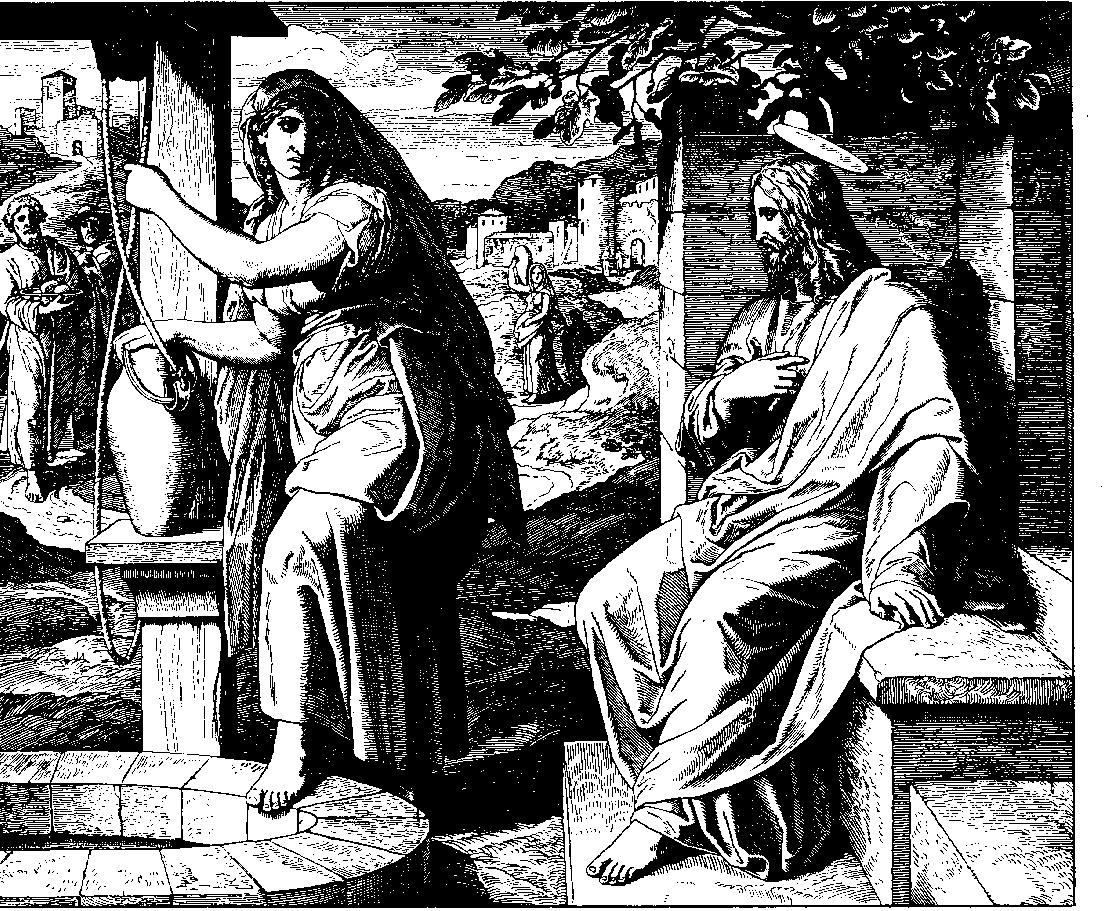
This black and white woodcut or engraving depicts the biblical scene of Jesus and the Woman at the Well, rendered with high contrast and intricate line work characteristic of the printmaking style. The composition is divided into two primary focal points situated side-by-side. On the left, a woman is seated on the stone rim of a well, her body angled slightly towards the right. She wears a long, flowing robe that drapes over her legs, and a dark veil covers her head and cascades down her back. Her right arm is extended, holding a rope or handle connected to a large, round water jar resting on the well's edge. Her left hand rests on her lap, and her gaze is directed forward, seemingly towards the figure on the right. To the far left, in the background, two smaller figures stand near a wall, observing the scene. In the center-right of the image, Jesus sits on a stone bench or ledge, facing the woman. He is depicted with long hair and a beard, wearing a simple, draped robe. His right hand is raised in a gesture of conversation or blessing, while his left hand rests on his knee. A halo is visible above his head. Behind him, a tree with dense foliage provides a natural backdrop. The background features a landscape with rolling hills, buildings, and a few other figures, suggesting a rural setting. The lighting is dramatic, with strong shadows and highlights emphasizing the contours of the figures and the texture of their clothing. The overall mood is contemplative and serene, capturing a moment of spiritual interaction. There is no readable text in the image.
|
15
|
001640011
|
|
{
  "sample_id": "001640011",
  "url": "https://pd12m.s3.us-west-2.amazonaws.com/images/bee1feda-8e81-5cdc-a65d-04344c3b0f29.png",
  "key": "001640011",
  "status": "success",
  "width": 400,
  "height": 282,
  "original_width": 400,
  "original_height": 282,
  "sha256": "50a37e4160fd6e3324aa2e44c87ae4747c7674a03655b1c5c54101396b50f2cb",
  "source_shard": "00164.tar",
  "source_tar": "/capstor/store/cscs/swissai/infra01/vision-datasets/hf___Spawning___pd12m-full/00164.tar"
}
|
This is a black and white photograph capturing a tranquil canal scene, likely in a historic European city. The composition is dominated by a row of traditional brick buildings situated on the right bank of the waterway. These structures feature steep, tiled roofs with prominent dormer windows, characteristic of Dutch or Flemish architecture. The buildings are constructed from dark brick, with lighter-colored window frames and doorways. Several windows are visible, some appearing dark and others reflecting the ambient light. A small figure, possibly a woman, stands on the sidewalk in front of one of the buildings, wearing a light-colored dress or coat that contrasts with the darker tones of the architecture. To the left of the canal, a large tree with dense foliage overhangs the water, its branches extending into the frame. The canal itself is calm, with the reflections of the buildings and the tree clearly visible on its surface. In the background, further down the canal, another building with a gabled roof can be seen, along with what appears to be a bridge or archway spanning the water. The overall atmosphere is serene and timeless, evoking a sense of quietude and historical charm. The lighting is soft and diffused, suggesting an overcast day or early morning/late afternoon. There is no readable text present in the image.
|
16
|
001640022
|
|
{
  "sample_id": "001640022",
  "url": "https://pd12m.s3.us-west-2.amazonaws.com/images/c8439f30-fa0f-56f3-93f5-aa94d6731bae.png",
  "key": "001640022",
  "status": "success",
  "width": 2183,
  "height": 1556,
  "original_width": 2183,
  "original_height": 1556,
  "sha256": "0a0b994996a9dd7695df39d6f702e8e8f844f21c37a84df583ee00f2fcd2d172",
  "source_shard": "00164.tar",
  "source_tar": "/capstor/store/cscs/swissai/infra01/vision-datasets/hf___Spawning___pd12m-full/00164.tar"
}
|
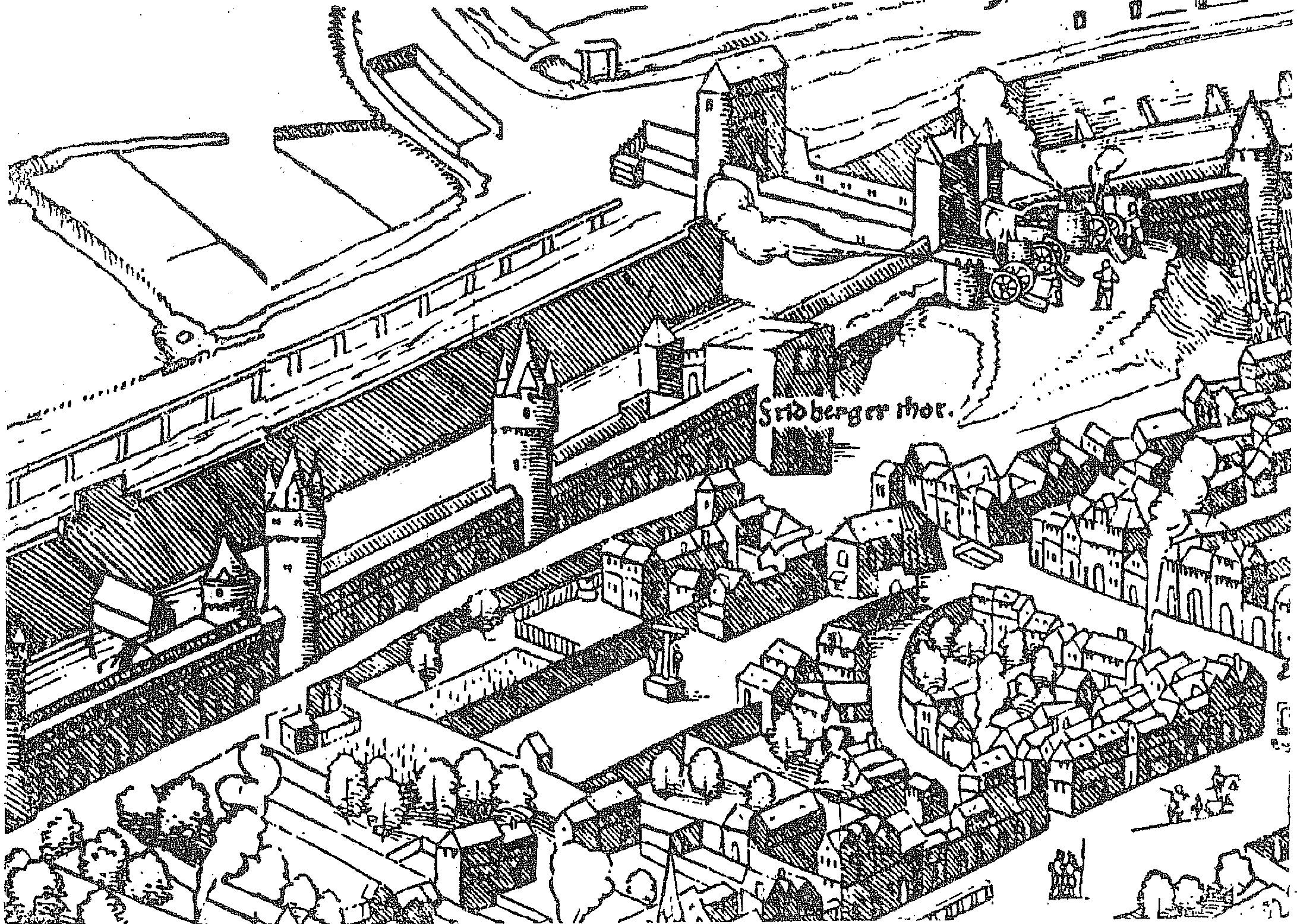
This black-and-white line drawing, executed in an isometric perspective, depicts a fortified medieval town under siege. The composition is dominated by a massive, high city wall that stretches diagonally from the upper left to the lower right, separating the urban area from the surrounding landscape. The wall is constructed with heavy, textured masonry and is punctuated by several towers. On the left side, a prominent tower with a conical roof stands guard, while further along the wall, another tower with a crenellated top is visible. The wall itself features battlements and what appear to be arrow slits or small windows.

Inside the walls, the town is densely packed with buildings. These structures are rendered with simple geometric shapes, featuring pitched roofs and varying heights. A central open space, possibly a town square or market area, is visible, surrounded by these buildings. Trees and other vegetation are scattered throughout the town, adding a touch of greenery to the otherwise stone and wood landscape. The streets and pathways are depicted as narrow and winding, connecting the various parts of the town.

Outside the walls, the scene is one of conflict. A large cannon is positioned on the right side of the image, aimed towards the city. The cannon is mounted on a wheeled carriage and is being operated by several figures. These individuals are depicted in period-appropriate attire, with some appearing to be soldiers or artillerymen. They are actively engaged in firing the cannon, as indicated by the smoke and the dynamic posture of the figures. The cannonball is shown in mid-flight, heading towards the city wall.

The surrounding landscape is relatively flat, with some fields and open spaces visible beyond the city walls. The sky is clear, with no clouds or other atmospheric effects depicted. The overall mood of the image is one of tension and impending conflict, as the city prepares to defend itself against the attacking forces. The style of the drawing is reminiscent of historical illustrations or maps, with a focus on detail and accuracy in the depiction of the architecture and the siege equipment.

In the center of the image, near the city wall, there is a label that reads "Stribberger thor," indicating the name of the gate or tower. This text is written in a clear, legible font and is positioned to provide context for the viewer. The label helps to identify the specific location within the city and adds to the historical authenticity of the illustration.
|
17
|
001640010
|
|
{
  "sample_id": "001640010",
  "url": "https://pd12m.s3.us-west-2.amazonaws.com/images/991cfc1c-db37-50ab-961d-ca1f73c2a54c.jpeg",
  "key": "001640010",
  "status": "success",
  "width": 750,
  "height": 475,
  "original_width": 750,
  "original_height": 475,
  "sha256": "0019b01168877a754f50118c641009e600d16477945418ac77a8e03a15751e59",
  "source_shard": "00164.tar",
  "source_tar": "/capstor/store/cscs/swissai/infra01/vision-datasets/hf___Spawning___pd12m-full/00164.tar"
}
|
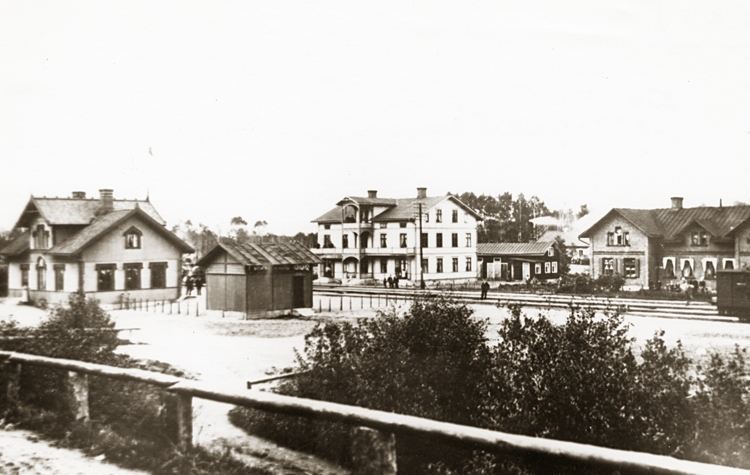
This is a sepia-toned, historical photograph capturing a bustling train station scene from the late 19th or early 20th century. The composition is framed by a low, wooden fence in the immediate foreground, running horizontally across the bottom of the image, with dense, leafy bushes growing just behind it. Beyond this barrier lies a wide, unpaved area, likely a dirt road or platform, leading towards the central structures.

Dominating the middle ground are three distinct buildings arranged in a row, separated by railway tracks. To the far left stands a single-story building with a steep, gabled roof and a prominent chimney stack. It features a large, arched window on its front facade and several smaller, rectangular windows along its side. Adjacent to this structure, slightly set back, is a smaller, box-like shed with a slanted roof, possibly a ticket booth or utility shed.

In the center of the frame, a larger, multi-story building serves as the main station house. This structure is two stories high, constructed with light-colored siding, and features a complex roofline with multiple gables and dormer windows. A balcony or veranda wraps around the upper floor, supported by pillars. Several figures, appearing as small silhouettes, can be seen standing on the platform in front of this building, suggesting activity and movement. To the right of the central station, another building mirrors the architectural style of the one on the left, featuring a gabled roof and a chimney. This structure appears to be a waiting room or passenger facility, with large windows facing the tracks.

The railway tracks themselves run horizontally through the middle of the scene, dividing the foreground from the buildings. They appear to be single tracks, with wooden sleepers visible beneath the rails. In the background, beyond the buildings, a line of trees and foliage creates a natural backdrop, indicating that the station is situated in a somewhat rural or semi-rural setting. The sky above is a uniform, pale expanse, devoid of clouds, contributing to the flat, even lighting characteristic of the era's photography. The overall atmosphere is one of quiet industry, capturing a moment in time at a transportation hub. No readable text is visible on any of the buildings or signage.
|
18
|
001640026
|
|
{
  "sample_id": "001640026",
  "url": "https://pd12m.s3.us-west-2.amazonaws.com/images/2b2d0977-3810-5cf8-b7f8-28c7189b856f.png",
  "key": "001640026",
  "status": "success",
  "width": 1249,
  "height": 1035,
  "original_width": 1249,
  "original_height": 1035,
  "sha256": "075ca1dacf97969c8e7fd64020af24063f380d1bb683a6d1571087e32f71fec8",
  "source_shard": "00164.tar",
  "source_tar": "/capstor/store/cscs/swissai/infra01/vision-datasets/hf___Spawning___pd12m-full/00164.tar"
}
|
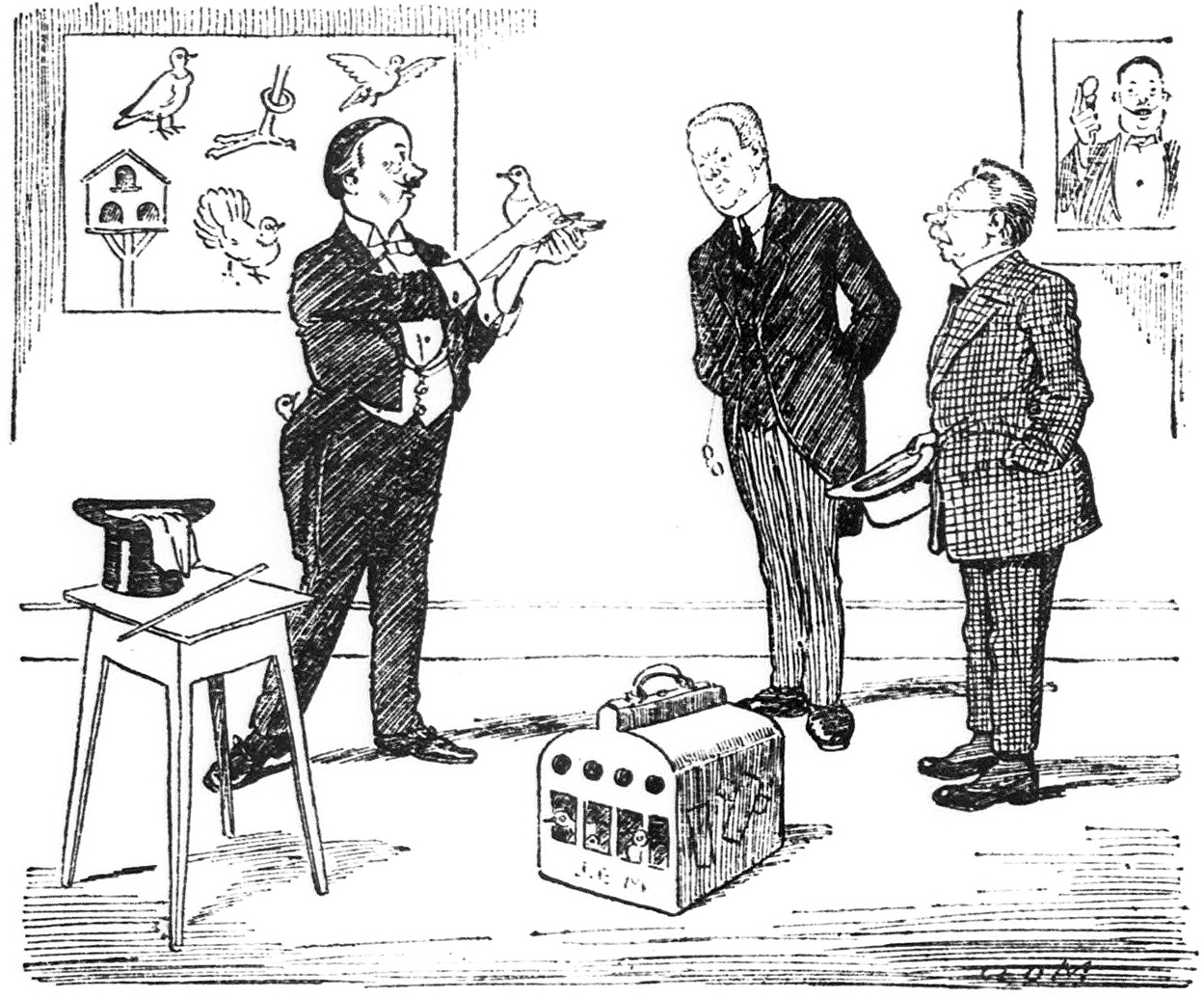
This black-and-white ink illustration depicts a scene inside what appears to be a magician's performance space or a dressing room, featuring three men and various props. On the left side of the composition stands a man dressed in a formal magician's outfit, consisting of a dark tailcoat, a white waistcoat with buttons, and a bow tie. He has a prominent mustache and slicked-back hair. He is holding a small bird, likely a dove, in his hands, presenting it towards the other two men. To his immediate left, a small, four-legged stool holds a top hat with a handkerchief peeking out and a magic wand resting on the surface. Behind the magician, a large framed poster or chart is mounted on the wall, displaying various drawings of birds: a pigeon standing on a perch, a bird in flight, a birdhouse with two openings, and another bird in flight. In the center of the image, a second man stands with his hands in his pockets, wearing a dark suit jacket, a light-colored shirt, a tie, and vertically striped trousers. He looks down at the magician and the bird. To the right, a third man, wearing a checkered or plaid suit jacket and matching trousers, stands with his hands in his pockets, also observing the scene. He holds a top hat in his left hand. On the floor between the central and right-hand men sits a rectangular, box-like object with a handle on top and several circular cutouts or windows along its front face, resembling a birdcage or a specialized prop. In the upper right corner, a smaller framed picture hangs on the wall, showing a caricature of a man in a tuxedo holding up a coin. The artist's signature, "C. O. M.", is visible in the bottom right corner. The style is a detailed line drawing with cross-hatching used for shading and texture, giving the image a classic, vintage cartoon or editorial illustration feel.
|
19
|
001640061
|
|
{
  "sample_id": "001640061",
  "url": "https://pd12m.s3.us-west-2.amazonaws.com/images/c666e733-f8ed-5c23-80c2-6312f0fee02a.png",
  "key": "001640061",
  "status": "success",
  "width": 1864,
  "height": 1351,
  "original_width": 1864,
  "original_height": 1351,
  "sha256": "8abb0a9df8603cbb3e4b82bd0de50b5924dddb7e21f5a45b8c9fc8cf2fbac999",
  "source_shard": "00164.tar",
  "source_tar": "/capstor/store/cscs/swissai/infra01/vision-datasets/hf___Spawning___pd12m-full/00164.tar"
}
|
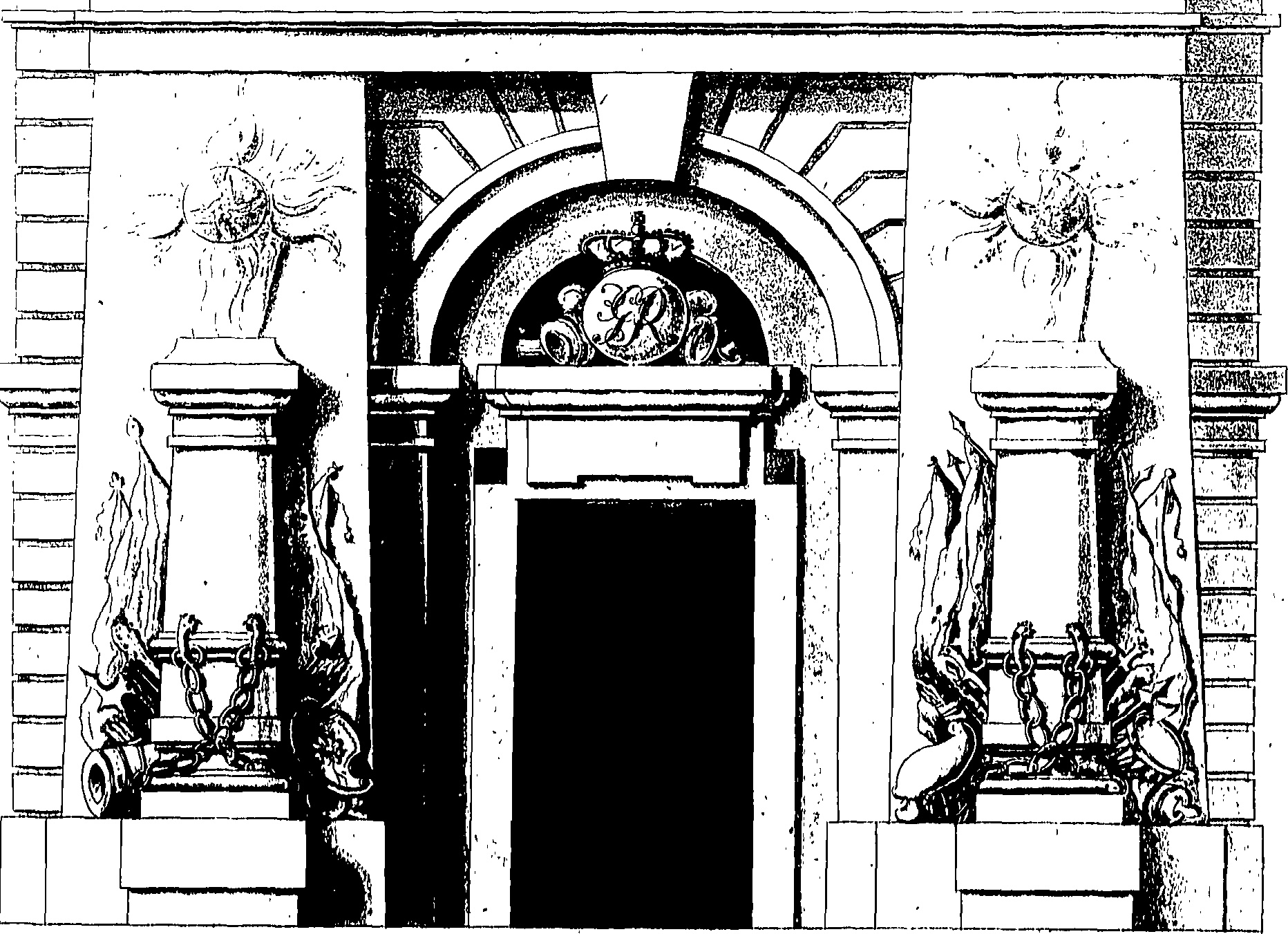
This black-and-white architectural drawing depicts a highly ornate and symmetrical facade, likely representing a grand entrance or a significant public building. The composition is strictly symmetrical, centered around a dark, rectangular doorway that is recessed into the wall. Above this entrance sits a prominent, arched pediment. Within the curve of this arch, a circular cartouche is prominently displayed, featuring a crowned monogram, which appears to be the letters "GR" intertwined, suggesting a royal connection, possibly to King George III or Queen Victoria. This cartouche is flanked by decorative scrollwork and rests upon a flat, rectangular lintel.

Flanking the central doorway are two identical, elaborate structures that serve as decorative pillars or pedestals. Each structure consists of a square, blocky base supporting a tall, rectangular column. Atop each column stands a sculptural element resembling a flaming urn or a torch, with stylized flames radiating upwards. Below the main column, at the base of the pedestal, are two sculpted figures, possibly putti or cherubs, appearing to hold or support heavy chains that drape over the structure. These chains add a sense of weight and grandeur to the design. The entire scene is rendered in a high-contrast, stippled style typical of architectural engravings or lithographs, using black ink on a white background to create depth and texture through shading. The background consists of a simple, flat wall with horizontal lines indicating brickwork or masonry, providing a neutral backdrop that emphasizes the intricate details of the central architectural features.
|
20
|
001640021
|
|
{
  "sample_id": "001640021",
  "url": "https://pd12m.s3.us-west-2.amazonaws.com/images/4fa17f63-fd29-52e3-adac-f3bb3bd3998c.png",
  "key": "001640021",
  "status": "success",
  "width": 1350,
  "height": 1200,
  "original_width": 1350,
  "original_height": 1200,
  "sha256": "e2b4cb0c61fa079d7f49286dcc46dd09a456fa1c629dcceb00bee7a8a233592b",
  "source_shard": "00164.tar",
  "source_tar": "/capstor/store/cscs/swissai/infra01/vision-datasets/hf___Spawning___pd12m-full/00164.tar"
}
|
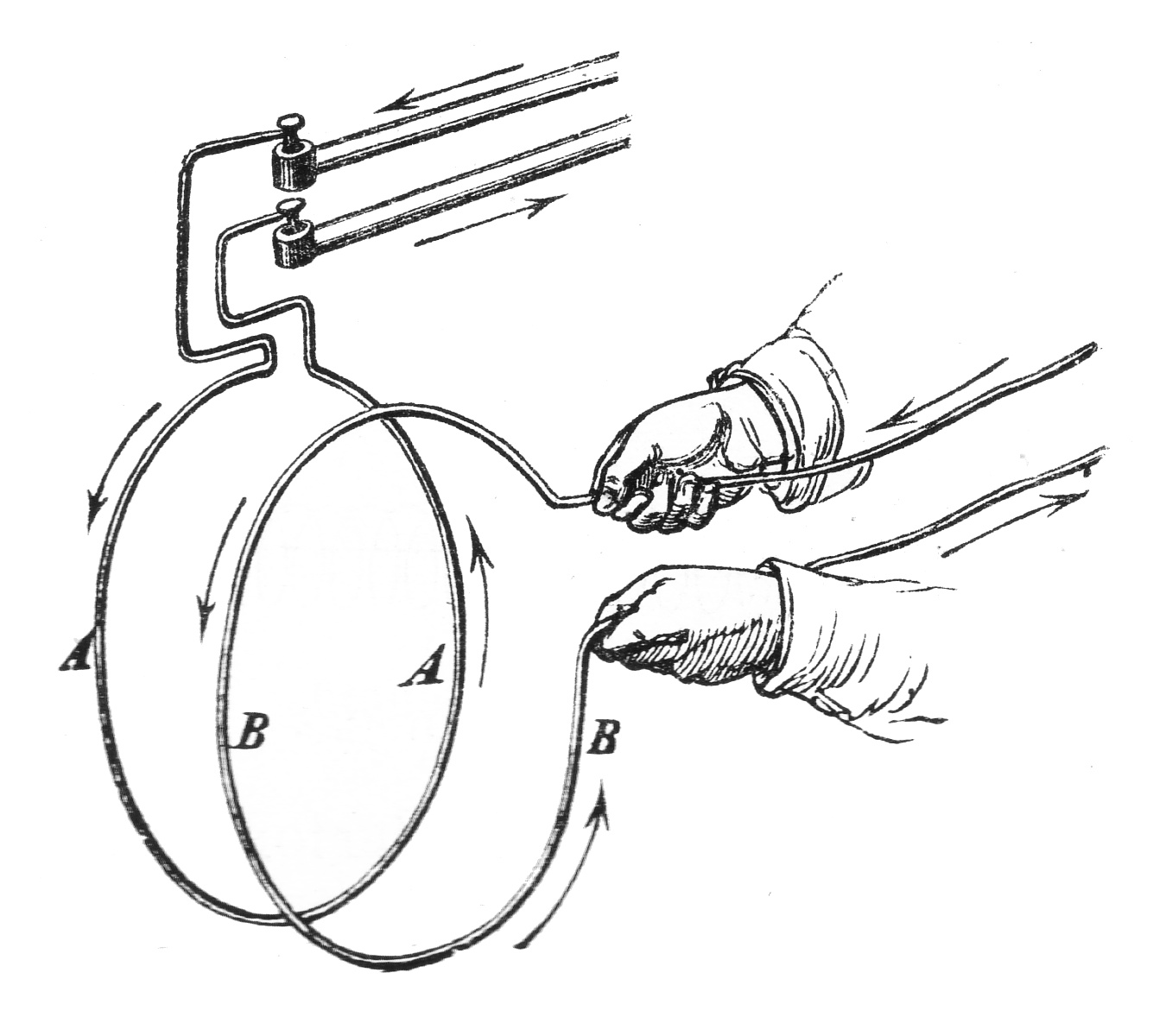
This black-and-white line drawing illustrates a scientific apparatus, likely from the 19th century, demonstrating an experiment involving electrical induction or galvanism. The image is rendered in a classic engraving style with fine lines and hatching to indicate form and shadow.

At the top left, two parallel horizontal rods are depicted. Each rod features a small, cylindrical knob or terminal at its left end. Arrows are drawn above these rods: the upper arrow points to the left, and the lower arrow points to the right, indicating the direction of movement or current flow. These rods are connected via a U-shaped wire that descends from the left side of the assembly.

This wire loops down and connects to a large, circular coil of wire situated in the lower-left quadrant of the image. The coil is drawn as a thick, continuous loop. Inside the loop, two letters are visible: an 'A' on the right side and a 'B' on the left side. Small arrows are drawn along the circumference of the coil, indicating a clockwise direction of rotation or current flow.

Extending from the right side of the coil is a long, thin wire that curves upward and to the right. This wire is being held by two hands, which are positioned in the middle-right portion of the image. The hands are drawn with realistic detail, showing fingers gripping the wire. The wrists are covered by what appear to be long, light-colored sleeves or gloves, possibly made of linen or cotton, typical of attire from the period. The upper hand holds the wire further along its length, while the lower hand grips it closer to the coil. Arrows are drawn near the hands, pointing away from the coil along the wire, suggesting the direction of force or current transmission.

The background is plain white, emphasizing the technical nature of the illustration. There are no other objects or environmental details present. The overall composition is clean and focused on the mechanical and electrical components of the device. The style is precise and educational, characteristic of scientific diagrams from the era of early electromagnetism.
|
21
|
001640019
|
|
{
  "sample_id": "001640019",
  "url": "https://pd12m.s3.us-west-2.amazonaws.com/images/43544e68-c34d-5797-8e4c-3fb6bdce2b81.png",
  "key": "001640019",
  "status": "success",
  "width": 816,
  "height": 583,
  "original_width": 816,
  "original_height": 583,
  "sha256": "718a95607bfdfe8f77019da12738ede270db292163b2483ad8db8c77b193206f",
  "source_shard": "00164.tar",
  "source_tar": "/capstor/store/cscs/swissai/infra01/vision-datasets/hf___Spawning___pd12m-full/00164.tar"
}
|
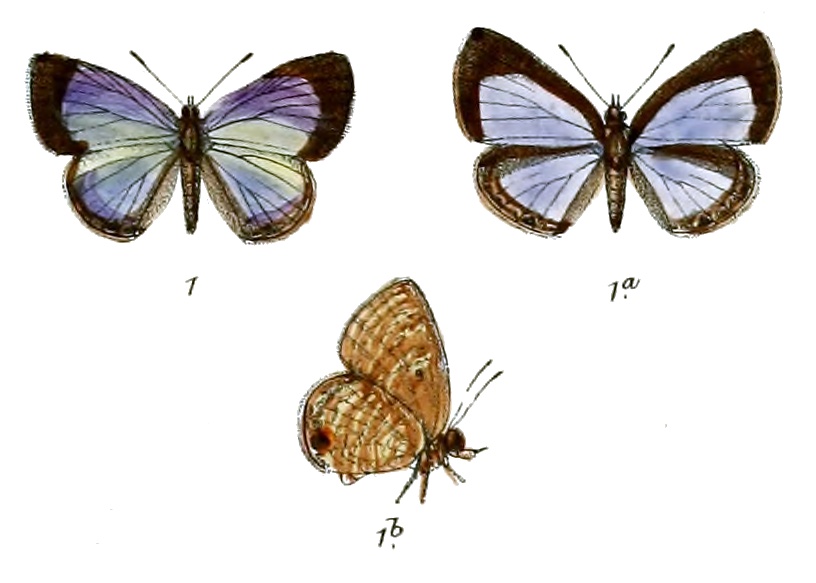
This scientific illustration presents three distinct views of a butterfly, rendered in a classic, detailed style against a stark white background. The composition is arranged with two specimens displayed horizontally across the upper portion of the frame, and a third specimen positioned centrally below them.

The top-left specimen, labeled "1" in a handwritten script beneath it, is depicted with its wings fully spread in a dorsal view. This butterfly features a striking coloration where the upper wings are bordered by a thick, dark brown margin that frames a vibrant, iridescent purple patch. Below this purple area, the wing transitions into a pale, creamy yellow or off-white section, which is veined with fine, dark lines. The lower wings mirror this pattern, displaying a similar gradient from the dark brown edge to a lighter, purplish-blue hue near the body. The body of the insect is slender and dark, with long, thin antennae extending upwards.

To the right of the first specimen is a second butterfly, labeled "1a" in the same handwritten style. This view appears to be a variation or a different angle of the same species, also shown with wings spread. The color palette here is slightly different; the wings are dominated by a pale, silvery-blue or lavender color, lacking the intense purple seen in the first specimen. The dark brown borders remain consistent, framing the lighter wings. The venation is clearly visible as a network of dark lines across the pale wings. The body and antennae are identical in structure to the first specimen.

Positioned below and between the two upper figures is the third specimen, labeled "1b". This view shows the butterfly with its wings folded vertically, presenting the dorsal surface of the hindwings and the underside of the forewings. The coloration in this view is predominantly earthy and muted, consisting of shades of brown and tan. The wings are covered in a complex pattern of scales that create a textured, mottled appearance, with small, dark spots scattered across the surface. The body is visible from the side, showing the legs and the underside of the head. The antennae are also visible, curving slightly outwards.

The background is a uniform, clean white, which isolates the subjects and emphasizes the details of the illustration. The style is that of a traditional scientific plate, likely created with colored pencils or watercolors, characterized by precise linework and careful attention to the texture and coloration of the insect's wings. There are no other objects or environmental elements present.
|
22
|
001640024
|
|
{
  "sample_id": "001640024",
  "url": "https://pd12m.s3.us-west-2.amazonaws.com/images/8526f52c-be80-55bd-9f32-230b9450d8e9.png",
  "key": "001640024",
  "status": "success",
  "width": 489,
  "height": 527,
  "original_width": 489,
  "original_height": 527,
  "sha256": "f57b32995788edfc9d211bc63f783e89714097b325a51e0ad6544f677b4d75f4",
  "source_shard": "00164.tar",
  "source_tar": "/capstor/store/cscs/swissai/infra01/vision-datasets/hf___Spawning___pd12m-full/00164.tar"
}
|
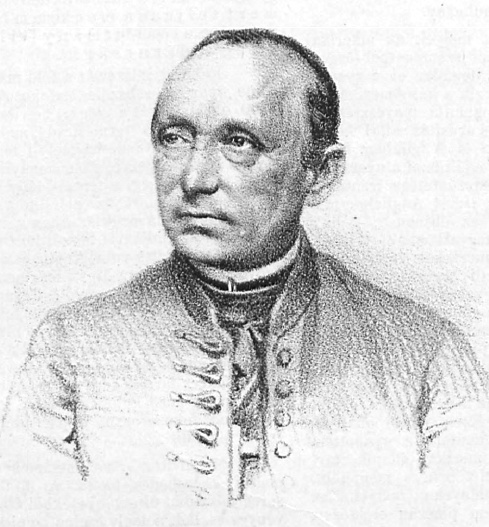
The image presents a monochromatic, engraved portrait of a middle-aged man, likely from the 19th century, rendered in a style characteristic of historical lithography or steel engraving. The subject is depicted from the chest up, facing slightly to the left, with his gaze directed forward, engaging the viewer with a serious and contemplative expression. His face is characterized by a high, receding hairline, revealing a broad forehead, and short, dark hair that is neatly combed back. The skin appears somewhat weathered, with visible lines around the eyes and mouth, suggesting age and experience. His eyes are deep-set and intense, framed by prominent eyebrows, and his nose is straight and well-defined. The mouth is closed in a firm line, adding to the overall solemnity of his demeanor.

He is dressed in formal attire typical of the period, wearing a high-collared shirt with a dark cravat or necktie tied neatly at the throat. Over this, he wears a jacket or coat with a distinctive design: the front features a series of decorative buttons arranged in two vertical rows, each button accompanied by a small, ornate loop or tassel. The fabric of the jacket appears to have a subtle texture, possibly indicating a fine material like wool or silk. The sleeves are long and fitted, ending just above the wrists. The overall color palette is grayscale, with varying shades of gray used to create depth and contrast, emphasizing the contours of his face and the details of his clothing.

The background is plain and unadorned, consisting of a light, almost white surface that provides a stark contrast to the darker tones of the subject's face and clothing. This simplicity ensures that the focus remains entirely on the man, highlighting his features and attire without any distractions. The lighting in the image is soft and even, casting gentle shadows that enhance the three-dimensional quality of the portrait. There is no discernible text within the image, and the composition is centered, with the subject occupying the majority of the frame. The overall mood conveyed is one of dignity and seriousness, capturing a moment of quiet reflection.
|
23
|
001640015
|
|
{
  "sample_id": "001640015",
  "url": "https://pd12m.s3.us-west-2.amazonaws.com/images/bdf22eea-2421-505e-9c0f-795b95f2bf20.png",
  "key": "001640015",
  "status": "success",
  "width": 777,
  "height": 638,
  "original_width": 777,
  "original_height": 638,
  "sha256": "34d9cf385cc519f960d73cbdde64e1861d66d02dc0c9fc57fdbaab4e16139ac5",
  "source_shard": "00164.tar",
  "source_tar": "/capstor/store/cscs/swissai/infra01/vision-datasets/hf___Spawning___pd12m-full/00164.tar"
}
|
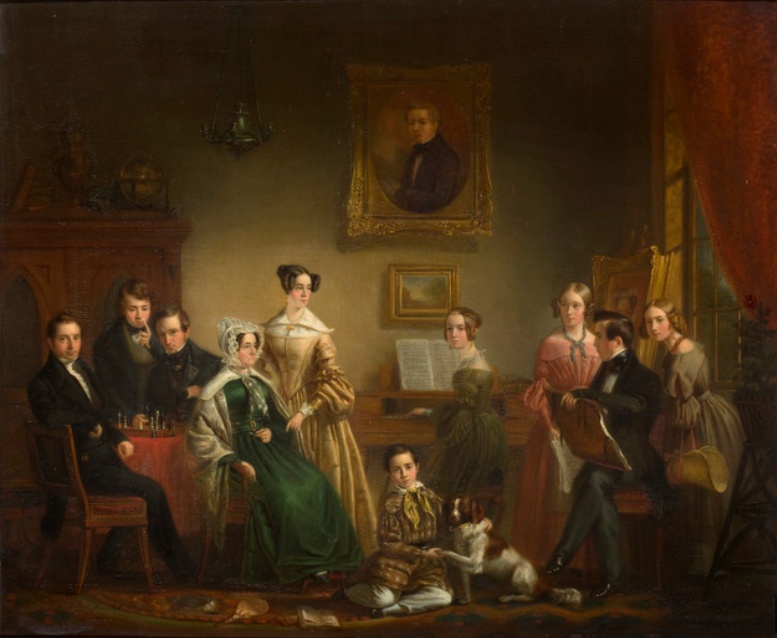
This is a detailed oil painting depicting a formal family gathering or a scene of domestic life within a well-appointed room. The composition is centered around a group of approximately eleven individuals, including adults and children, arranged in a semi-circle.

On the far left, a man in a dark suit sits on a wooden chair, looking towards the center. Behind him, two other men stand; one appears to be smoking a pipe, while the other leans forward, observing a chessboard set up on a small red table between them. To the right of the chessboard, a woman in a green dress and white bonnet sits, her gaze directed towards the viewer or slightly to the side. Standing next to her is a woman in a light-colored, high-collared dress, looking towards the center of the group.

In the foreground, a young boy in a patterned jacket and breeches sits on the floor, accompanied by a small dog, possibly a spaniel, which is lying down beside him. Behind the boy, a woman stands near a piano, holding sheet music, suggesting she might be playing or about to play. To the right of the piano, another woman in a pink dress stands, looking towards the group. Further to the right, a man in a dark suit sits on a bench, holding a hat, and next to him, a woman in a grey dress stands near a window draped with red curtains.

The room is richly decorated, with a large fireplace on the left side, adorned with various objects, including a globe and a vase. Above the fireplace hangs a chandelier. On the wall, there are two framed portraits; one is a larger, more prominent portrait of a man in a dark suit, and the other is a smaller, less distinct painting. The lighting in the room is soft and warm, creating a cozy and intimate atmosphere. The overall style of the painting is realistic, with attention to detail in the clothing, furniture, and expressions of the figures.
|
24
|
001640045
|
|
{
  "sample_id": "001640045",
  "url": "https://pd12m.s3.us-west-2.amazonaws.com/images/7a6e1f75-6f19-565e-ad4b-b7f89eb5a422.png",
  "key": "001640045",
  "status": "success",
  "width": 963,
  "height": 1509,
  "original_width": 963,
  "original_height": 1509,
  "sha256": "2f6eadfb01ce43c8510f64145b3b11db2824ac0f7de76cb94a0187ff647103fe",
  "source_shard": "00164.tar",
  "source_tar": "/capstor/store/cscs/swissai/infra01/vision-datasets/hf___Spawning___pd12m-full/00164.tar"
}
|
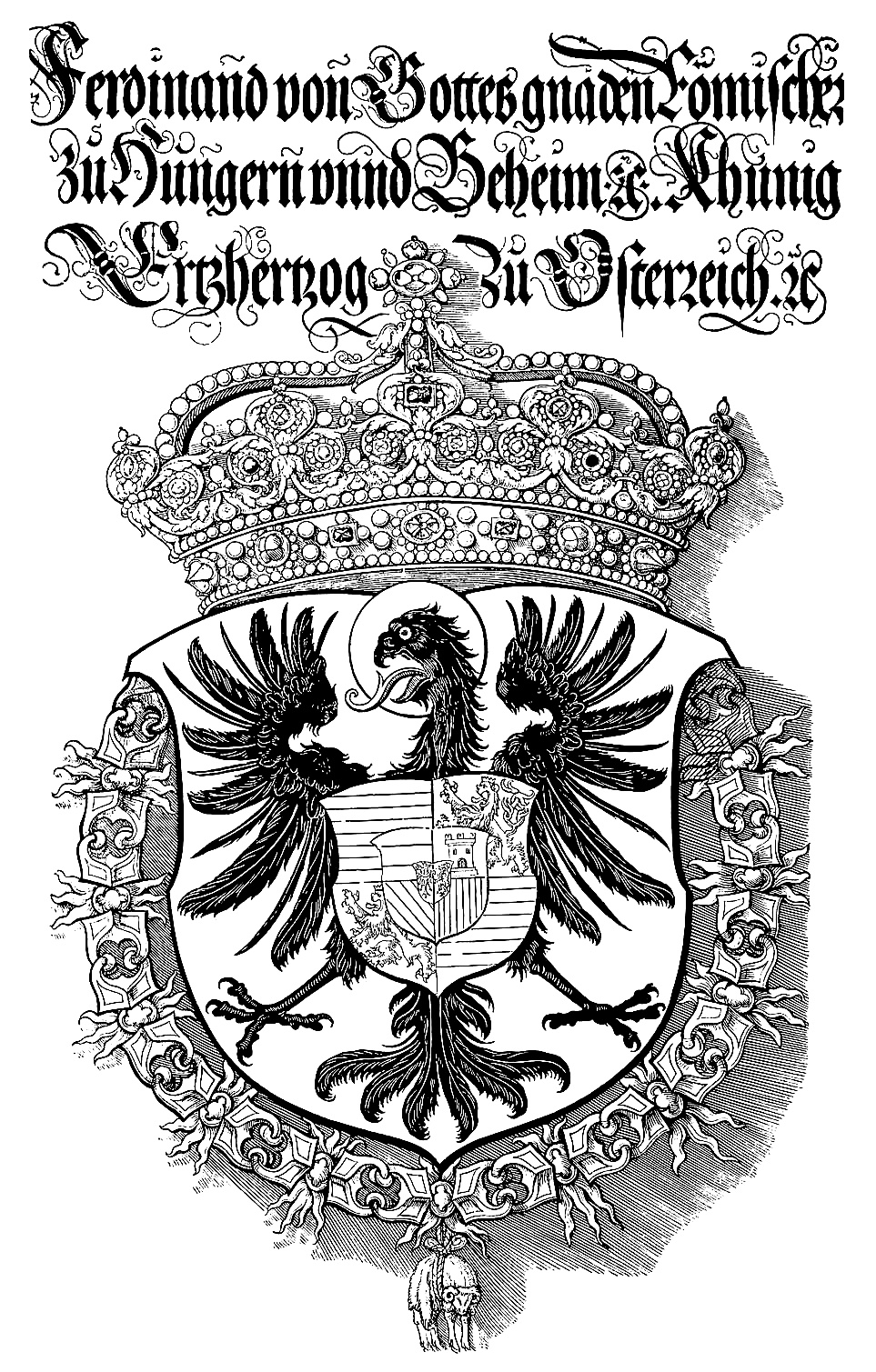
This black-and-white engraving depicts the imperial coat of arms of Ferdinand I, Holy Roman Emperor, rendered in a highly ornate and symbolic style. The composition is vertically oriented and centered, with the main heraldic elements arranged symmetrically around a central axis.

At the very top, an elaborate inscription in Gothic script reads: "Ferdinand von Gottes Gnaden Römischer zu Hungern vnd Böhmen K. König Erzherzog zu Österreich." This translates to "Ferdinand by the Grace of God, Roman King, King of Hungary and Bohemia, Archduke of Austria." The text is framed by decorative flourishes and sits above a large, jeweled imperial crown.

The crown itself is richly detailed, featuring a double arch structure adorned with pearls, gemstones, and intricate filigree work. It rests directly upon the shield, signifying imperial authority.

Below the crown lies the shield, which is quartered and charged with multiple symbols representing Ferdinand's domains. The shield is supported on either side by two black double-headed eagles, their wings spread wide and talons gripping the edges of the shield. These eagles are stylized with flowing feathers and fierce expressions, embodying power and sovereignty.

The shield’s field is divided into four quarters:
- The upper-left quarter displays horizontal stripes (bendy), representing the Kingdom of Hungary.
- The upper-right quarter shows a castle on a hill, symbolizing the Kingdom of Bohemia.
- The lower-left quarter features a lion rampant, associated with the Duchy of Austria.
- The lower-right quarter contains a chevron pattern, likely referencing the Habsburg dynasty.

Beneath the shield, a small figure stands on a pedestal, possibly representing a herald or allegorical figure, though details are minimal due to the engraving style.

The entire composition is surrounded by decorative borders composed of swirling acanthus leaves, floral motifs, and scrollwork, enhancing the regal and ceremonial nature of the image. The background is plain white, allowing the intricate linework and shading of the engraving to stand out sharply.

The medium appears to be a woodcut or steel engraving, characterized by fine lines, cross-hatching for shading, and high contrast between black ink and white paper. The overall mood is one of solemn grandeur and imperial majesty, reflecting the political and religious significance of the Habsburg monarchy during the early modern period.
|
25
|
001640007
|
|
{
  "sample_id": "001640007",
  "url": "https://pd12m.s3.us-west-2.amazonaws.com/images/64cb7ced-6f47-5ec0-913b-f275fa726323.jpeg",
  "key": "001640007",
  "status": "success",
  "width": 1200,
  "height": 790,
  "original_width": 1200,
  "original_height": 790,
  "sha256": "58b5d5cabb03e6ddcca0864c8888fee9b9bb5b2efc89593cae086acfb0573903",
  "source_shard": "00164.tar",
  "source_tar": "/capstor/store/cscs/swissai/infra01/vision-datasets/hf___Spawning___pd12m-full/00164.tar"
}
|
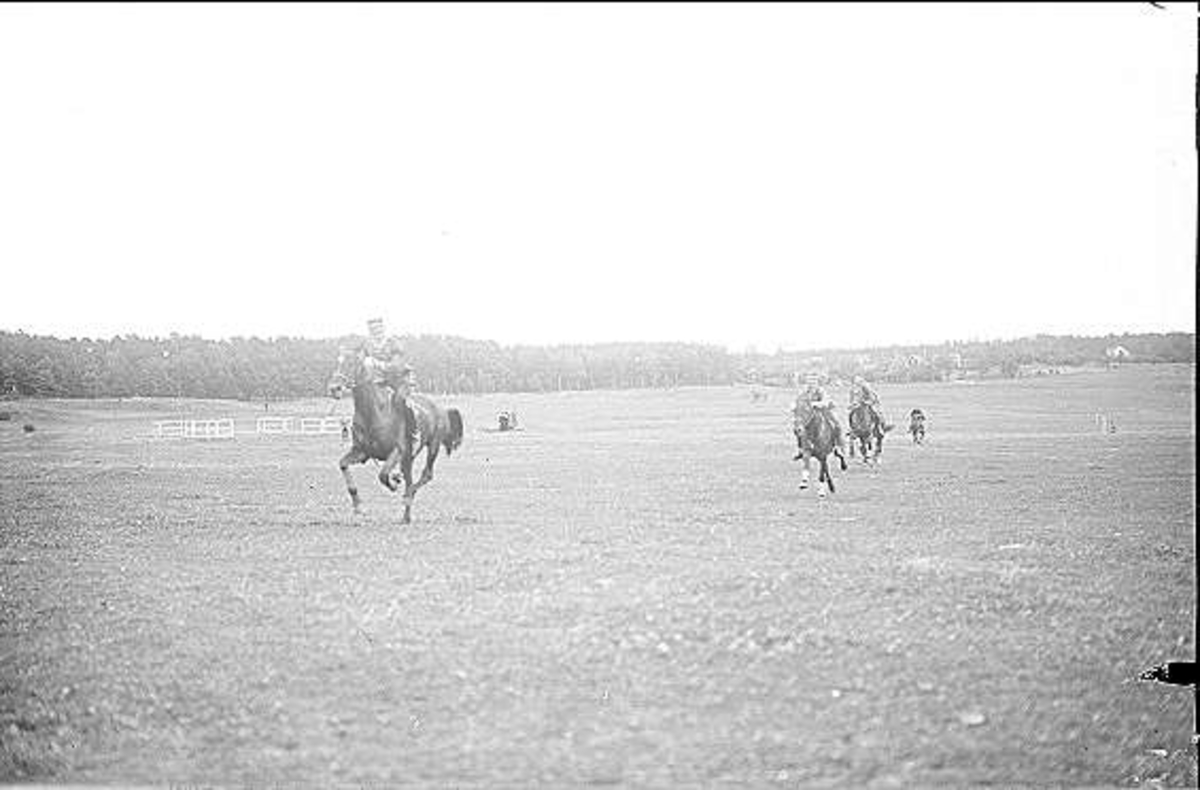
This is a grainy, black-and-white photograph capturing a dynamic scene of equestrian activity on a vast, open field. The composition is dominated by a large expanse of grassy terrain that stretches from the immediate foreground to a distant tree line. The sky above is a uniform, bright white, suggesting an overcast day or significant atmospheric haze, which washes out any distinct cloud formations or color.

The primary subjects are several riders on horseback, positioned at varying distances across the field. In the left-center foreground, a rider is captured in motion, galloping towards the viewer. This horse is dark in tone, with its legs extended in a running gait, conveying a sense of speed. The rider sits atop the horse, wearing what appears to be a light-colored shirt and darker trousers, though the details are obscured by the image's low resolution. To the right and further back in the mid-ground, a group of three other riders is visible. They are clustered together, also moving across the field, though they are smaller and less distinct due to the distance. A fourth, solitary figure on a horse is visible even further in the background, near the right edge of the frame.

The environment is a wide, flat pasture. In the far background, a dense line of trees forms a horizontal horizon, separating the field from the sky. To the left of the main foreground rider, a low, white fence or barrier runs horizontally across the field, marking a boundary or course. The ground texture is rough and uneven, typical of a natural grassland. The lighting is diffuse and flat, casting soft shadows and contributing to the somewhat hazy, historical feel of the photograph. The overall mood is one of active movement within a rural setting. There is no readable text present in the image.
|
26
|
001640034
|
|
{
  "sample_id": "001640034",
  "url": "https://pd12m.s3.us-west-2.amazonaws.com/images/1cabb76e-642f-5b58-a114-7024183c6eff.png",
  "key": "001640034",
  "status": "success",
  "width": 506,
  "height": 500,
  "original_width": 506,
  "original_height": 500,
  "sha256": "252a56db9bd1f43d6ed415905868c613a9d96c1e7f0d08bc5ca6b8ae58f517d2",
  "source_shard": "00164.tar",
  "source_tar": "/capstor/store/cscs/swissai/infra01/vision-datasets/hf___Spawning___pd12m-full/00164.tar"
}
|
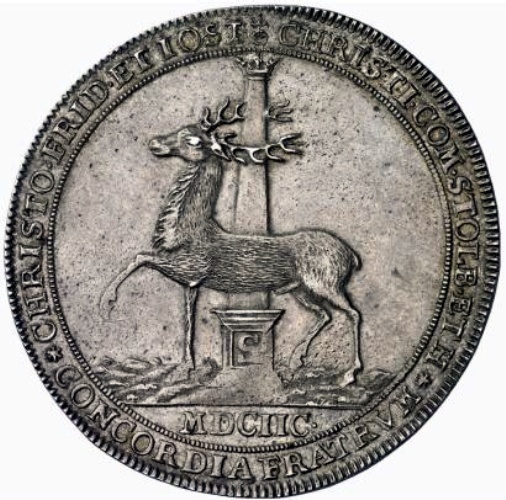
The image presents a close-up, high-resolution photograph of a circular, metallic coin, likely made of silver or a similar light-colored metal, exhibiting a textured, aged surface with visible scratches and patina. The coin is centered against a plain, off-white background, which isolates the object and emphasizes its details. The primary subject is a detailed relief sculpture on the coin's face, depicting a stag standing in profile, facing left. The stag is rendered with fine lines indicating its fur, muscular build, and prominent antlers. It stands upon a small, rectangular pedestal or base, which features a stylized letter 'C' or a similar symbol. Behind the stag, a tall, slender column or pillar rises, topped with a crown-like finial. The stag's posture is dynamic, with its front legs slightly apart and its head held high. The coin's rim is adorned with a series of small, raised dots or beads, creating a decorative border. Encircling the central design is an inscription in Latin, written in capital letters along the inner edge of the rim. The text reads: "CHRISTO FRID ET IOST CHRISTI COM STOLETH H CONCORDIA FRATRV MDCIIC". The lighting is even, highlighting the relief details and the texture of the metal, while the overall composition is symmetrical and focused on the coin's intricate design. The style is that of a historical artifact, likely from the 17th century, given the date "MDCIIC" (1612) inscribed at the bottom. The atmosphere is one of historical significance and craftsmanship, with the coin serving as a tangible piece of history.
|
27
|
001640051
|

|
{
  "sample_id": "001640051",
  "url": "https://pd12m.s3.us-west-2.amazonaws.com/images/c454f26c-fcd0-59f5-a1d1-74d0493de82e.png",
  "key": "001640051",
  "status": "success",
  "width": 1992,
  "height": 1125,
  "original_width": 1992,
  "original_height": 1125,
  "sha256": "1ab120f377360f52806870200cf5bea7f74c39d21c66ae4b47d4635ff2fa9c9b",
  "source_shard": "00164.tar",
  "source_tar": "/capstor/store/cscs/swissai/infra01/vision-datasets/hf___Spawning___pd12m-full/00164.tar"
}
|
The image displays a digital presentation slide with a clean, minimalist design. The background is predominantly white, accented by sweeping, curved bands of yellow and light purple that frame the top left and bottom right corners, creating a dynamic, modern aesthetic. Centered prominently on the slide is the main textual content, written in a bold, blue sans-serif font with a subtle drop shadow for depth. The text reads: “Educación para una vida exitosa,” which translates to "Education for a successful life." In the upper left corner, there is a circular emblem featuring a portrait of a man, flanked by wings, with the words "DESARROLLO EDUCATIVO" arched above and "IGNACIO ZARAGOZA" below. To the upper right, a stylized black logo resembling a quill or pen adds a touch of sophistication. The overall composition is balanced, with the text as the focal point, surrounded by decorative elements that enhance the professional and educational theme of the slide.
|
28
|
001640023
|
|
{
  "sample_id": "001640023",
  "url": "https://pd12m.s3.us-west-2.amazonaws.com/images/aceb87b4-200b-5c0e-a5c1-1ad225568079.png",
  "key": "001640023",
  "status": "success",
  "width": 489,
  "height": 321,
  "original_width": 489,
  "original_height": 321,
  "sha256": "7094e0fa39bee935fb30bffd6b80ed43d25193598e7bf066258352c000a5d40f",
  "source_shard": "00164.tar",
  "source_tar": "/capstor/store/cscs/swissai/infra01/vision-datasets/hf___Spawning___pd12m-full/00164.tar"
}
|
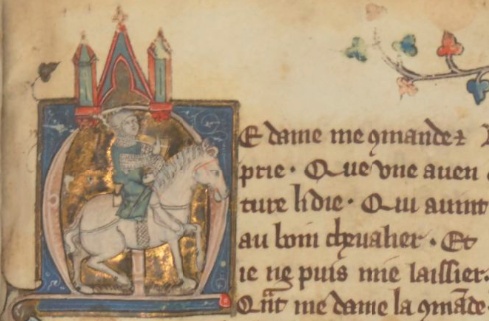
This image captures a close-up view of a page from a medieval illuminated manuscript, likely a Book of Hours or similar devotional text, characterized by its aged, parchment-like background with a warm, yellowish-brown hue. The composition is divided into two primary sections: an ornate initial letter on the left and a block of handwritten text on the right.

The initial letter, a large, decorated 'E', is enclosed within a rectangular frame with a blue background and a gold border. Above this frame sits a small, pointed architectural structure, resembling a miniature church or chapel, painted in red and green with gold accents. Inside the frame, a knight on horseback is depicted in profile, facing right. The knight wears a blue tunic and a helmet, and his horse is white with gold detailing on its legs and body. The knight holds a sword in his right hand, which is raised slightly. The horse's mane and tail are rendered in black, and its legs are shown in motion, suggesting it is walking or trotting.

To the right of the initial, the text is written in a Gothic script, with the letters in black ink. The text begins with "E dame me gmandez" and continues with "prie. Que vne auen ture hdie. Ou auim au lom epuacher. Et ie ne puis mie laillier. Oit me dame la gma". The text is arranged in lines, with some words abbreviated or stylized. Above the text, there are small, colorful illustrations of birds perched on branches, painted in shades of blue, green, and red. These birds add a decorative element to the page, enhancing the overall aesthetic of the manuscript. The lighting in the image is even, highlighting the details of the illumination and the texture of the parchment. The overall mood is one of historical reverence and artistic craftsmanship, typical of medieval manuscripts.
|
29
|
001640001
|
|
{
  "sample_id": "001640001",
  "url": "https://pd12m.s3.us-west-2.amazonaws.com/images/7c3534e3-b5f0-5dc0-b02f-947a0740b83a.jpeg",
  "key": "001640001",
  "status": "success",
  "width": 1196,
  "height": 1200,
  "original_width": 1196,
  "original_height": 1200,
  "sha256": "9ce1e9de408727e6465df8b626909982701999878509112ca58b56350880e81a",
  "source_shard": "00164.tar",
  "source_tar": "/capstor/store/cscs/swissai/infra01/vision-datasets/hf___Spawning___pd12m-full/00164.tar"
}
|
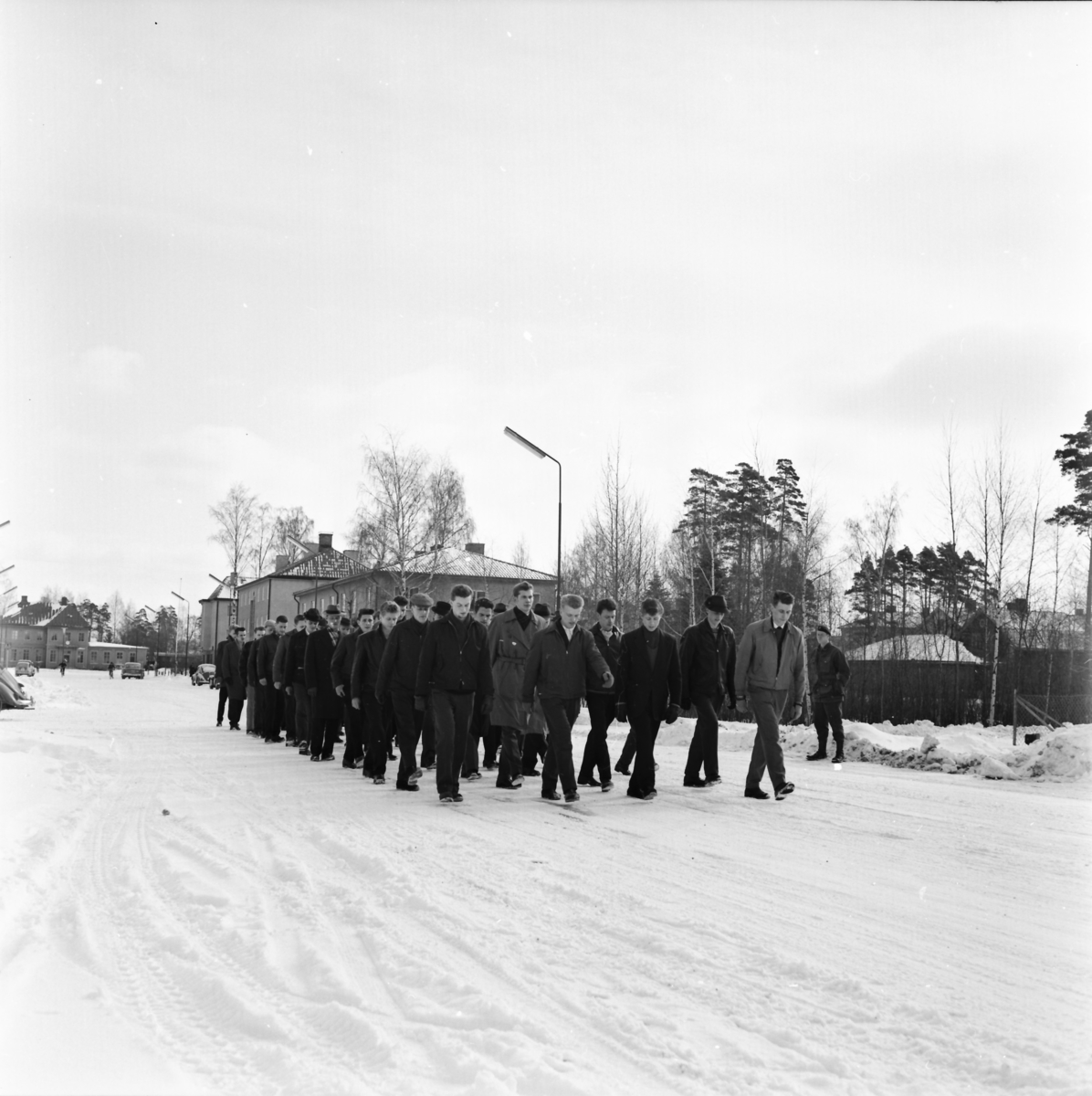
This black and white photograph captures a long, orderly line of young men walking across a vast, snow-covered landscape. The group, numbering approximately twenty-five to thirty individuals, is arranged in a single file, moving from the left side of the frame towards the right. They are dressed uniformly in dark, heavy winter coats, trousers, and shoes, suggesting a formal or institutional gathering. Their expressions are largely neutral or serious, and their posture is upright as they traverse the terrain. The ground is blanketed in a thick layer of snow, marked by numerous tire tracks and footprints, indicating recent vehicle and pedestrian activity.

To the left of the procession, a large, multi-story building with a pitched roof and visible chimneys stands prominently. This structure appears to be a barracks, dormitory, or institutional facility, characterized by its rectangular windows and solid construction. Further in the background, other smaller buildings and trees are visible, some bare and others evergreen, adding depth to the scene. A tall streetlamp rises above the line of marchers, positioned slightly behind them. The sky is overcast, creating a diffuse, flat lighting that casts soft shadows and contributes to the stark, monochromatic aesthetic of the image. The overall atmosphere is one of discipline and uniformity, evoking a sense of historical context, possibly related to a military or educational institution during the mid-20th century. No text is visible in the image.
|
30
|
001640029
|
|
{
  "sample_id": "001640029",
  "url": "https://pd12m.s3.us-west-2.amazonaws.com/images/8d685b25-50ab-5246-85b6-a4b885f5c917.png",
  "key": "001640029",
  "status": "success",
  "width": 1300,
  "height": 1646,
  "original_width": 1300,
  "original_height": 1646,
  "sha256": "4aacec6220b7a47099acf568816f63549f6b412e6b2adc11edc3d9bf8d34eb7f",
  "source_shard": "00164.tar",
  "source_tar": "/capstor/store/cscs/swissai/infra01/vision-datasets/hf___Spawning___pd12m-full/00164.tar"
}
|
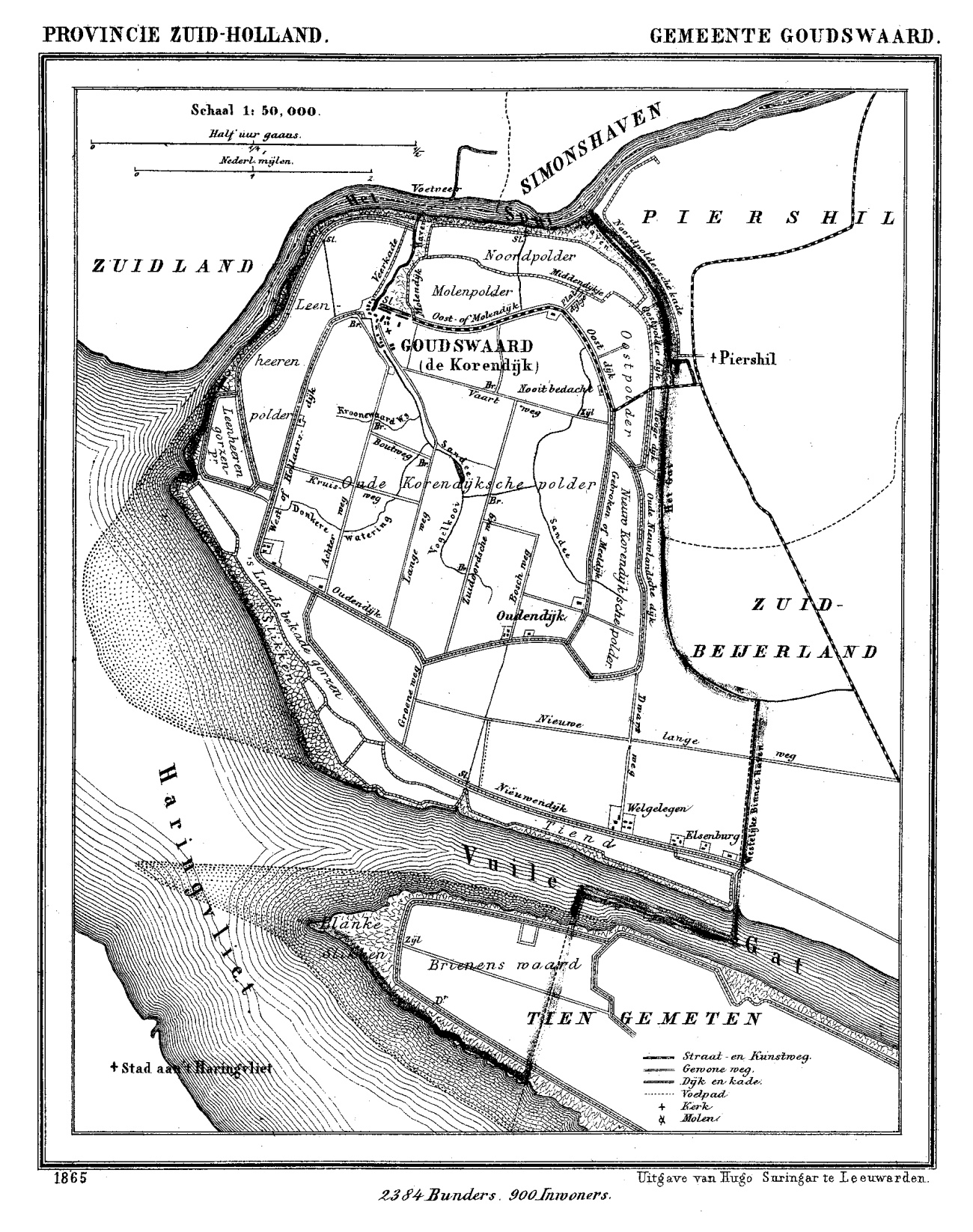
This is a black and white historical map, rendered in an engraving style, depicting the municipality of Goudswaard within the province of South Holland. The composition is dominated by a central landmass, a polder, enclosed by a thick, continuous line representing a dike or embankment. This central area is subdivided into numerous smaller, rectangular plots of land by a network of thin lines representing roads and canals. The map is framed by a border containing textual information and a legend.

At the top of the image, the text "PROVINCIE ZUID-HOLLAND." is printed on the left, and "GEMEENTE GOUDSWAARD." is on the right. Below this, a scale bar indicates "Schaal 1: 50,000," with subdivisions for "Half uur gaans" and "Nederl. mijlen." The central landmass is labeled "GOUDSWAARD (de Korendijk)" in the middle. Surrounding this central area are various geographical features and neighboring regions. To the north, across a body of water labeled "SIMONSHAVEN," lies "PIERSHIL." To the west is "ZUIDLAND." To the east is "ZUID-BEERLAND." To the south, across a channel labeled "Haringvliet," is the area "TIEN GEMETEN."

The map details the internal structure of Goudswaard with specific labels for different sections. Inside the main dike, names such as "Noordpolder," "Molenpolder," "Oostpolder," "Oudendijk," and "Oude Korendijksche polder" identify distinct zones. A network of roads and paths crisscrosses these zones, with names like "Kruisweg," "Langere weg," "Zuidendijk," and "Nieuwe weg" marking their routes. Several waterways are also depicted, including the "Vaart" and "Watering."

Outside the main dike, to the south, the "Haringvliet" is shown with hatching to indicate water depth or flow. A location marked "+ Stad aan 't Haringvliet" is situated on the southern bank of this waterway. Further south, the area "TIEN GEMETEN" is shown, containing features like "Briene's waard" and "Elzenburg." To the east, beyond "ZUID-BEERLAND," the map extends to show "PIERSHIL" again and a location marked "+Piershil."

The bottom of the image contains a legend in the lower right corner, explaining the symbols used: a solid line for "Straat en Kunstweg" (Street and Artificial Road), a dashed line for "Gewone weg" (Ordinary Road), a double line for "Dijk en kade" (Dike and Quay), a dotted line for "Voetpad" (Footpath), a cross for "Kerk" (Church), and a symbol resembling a mill for "Molen" (Mill). At the very bottom, the date "1865" is printed on the left, and "Uitgave van Hugo Suringar te Leeuwarden" is on the right. Centered at the bottom is the text "2384 Bunders. 900 Inwoners." The overall style is that of a precise, technical cartographic illustration from the 19th century, characterized by fine lines, clear typography, and a lack of color.
|
31
|
001640048
|
|
{
  "sample_id": "001640048",
  "url": "https://pd12m.s3.us-west-2.amazonaws.com/images/107453b7-b42b-5902-a793-4a1a55d43a11.png",
  "key": "001640048",
  "status": "success",
  "width": 1056,
  "height": 695,
  "original_width": 1056,
  "original_height": 695,
  "sha256": "6e78d556b3c1bfcb8919983a148ad3e3ae987ec300f0de7577cf54026ef0a8a1",
  "source_shard": "00164.tar",
  "source_tar": "/capstor/store/cscs/swissai/infra01/vision-datasets/hf___Spawning___pd12m-full/00164.tar"
}
|
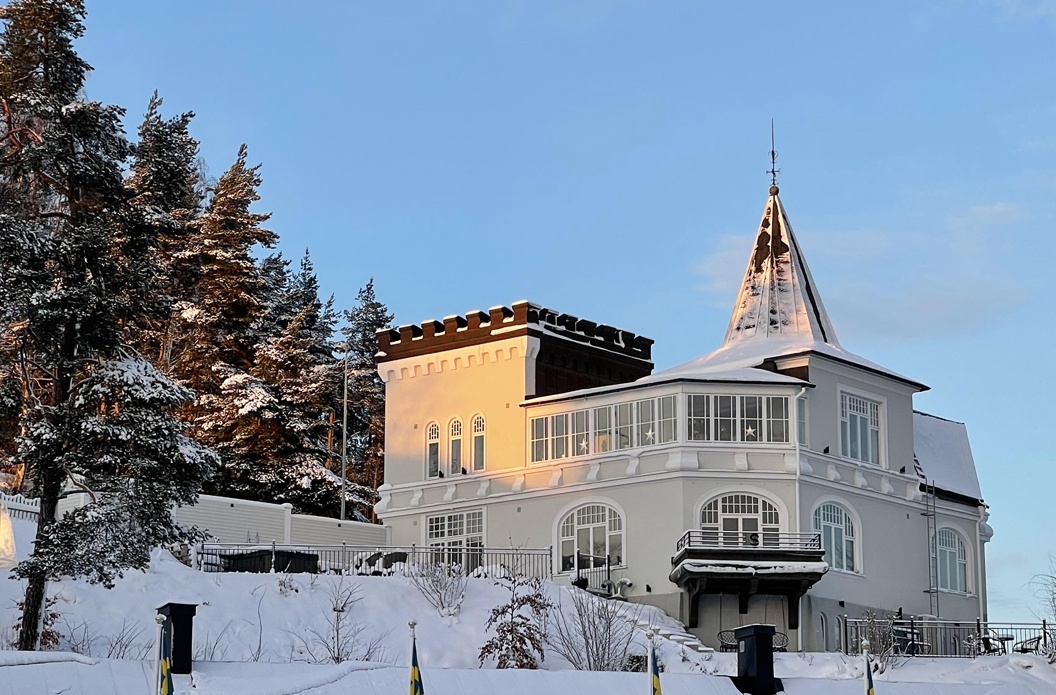
A large, multi-story building dominates the center-right of the frame, set against a clear, pale blue sky. The structure is painted a light, neutral color, possibly off-white or light grey, with white trim around its numerous windows. It features a complex roofline, including a prominent, steeply pitched tower on the right side, which is capped with a dark, pointed spire topped by a small weather vane. The roof surfaces are covered in a layer of snow. To the left of the tower, a section of the building has a flat roof with a decorative, dark, crenellated parapet, resembling a castle battlement. The facade is punctuated by many windows; some are tall and narrow with arched tops, while others are larger, rectangular panes, particularly on a sunroom-like extension that juts out from the main structure. A small balcony with a dark railing is visible on the lower level of this extension.

The building is situated on a snowy slope. To the left of the building, a dense cluster of tall evergreen trees, likely spruce or fir, rises up the hillside. Their branches are heavily laden with snow, and the sunlight, coming from the left, casts a warm, golden glow on the side of the building facing the trees, contrasting with the cooler shadows on the right side of the structure. In the foreground, the ground is blanketed in deep snow. Several small, dark objects, possibly utility boxes or posts, are scattered across the snowy foreground. A low, white fence runs along the base of the hill to the left of the building. The overall lighting suggests late afternoon or early morning, with long shadows and a soft, directional light. The scene conveys a quiet, wintry atmosphere. There is no readable text visible in the image.
|
32
|
001640055
|
|
{
  "sample_id": "001640055",
  "url": "https://pd12m.s3.us-west-2.amazonaws.com/images/a6172f69-8a9f-5db7-82c2-55c11cd5037a.png",
  "key": "001640055",
  "status": "success",
  "width": 817,
  "height": 748,
  "original_width": 817,
  "original_height": 748,
  "sha256": "bbf96fcb12437dc89c2e0bd69b0ba139e3f1c6374c0812d197d13b7675347b6e",
  "source_shard": "00164.tar",
  "source_tar": "/capstor/store/cscs/swissai/infra01/vision-datasets/hf___Spawning___pd12m-full/00164.tar"
}
|
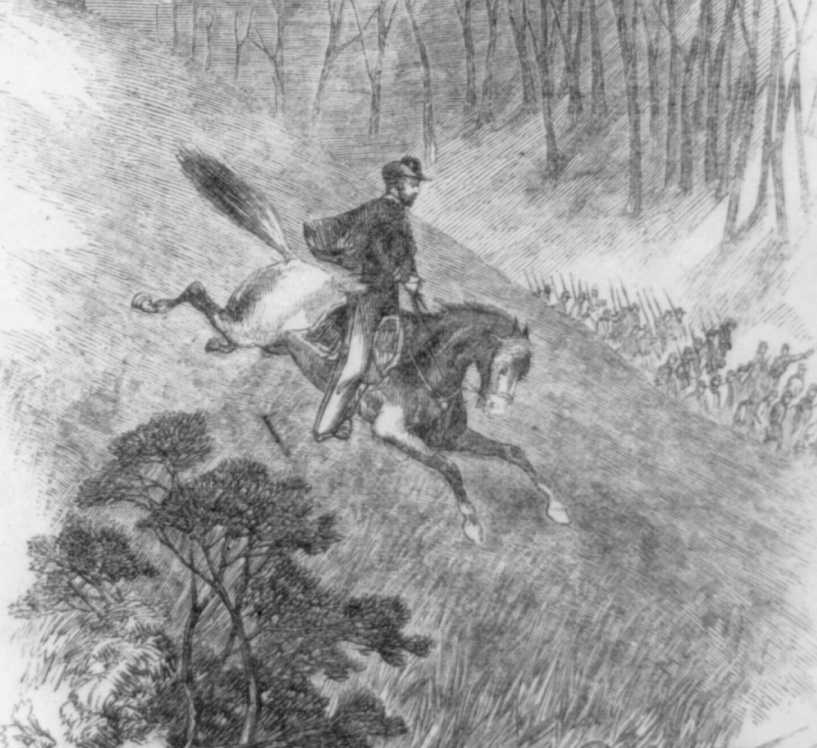
This black-and-white illustration, rendered in a style characteristic of 19th-century engravings or lithographs, captures a dynamic military scene. The central figure is a man on horseback, depicted in profile as he gallops from left to right across the composition. He wears a dark, heavy coat, possibly a greatcoat, which billows behind him, suggesting rapid movement. A wide-brimmed hat, likely a kepi or similar military cap, sits atop his head. His posture is forward-leaning, indicating urgency and command. The horse beneath him is a light-colored animal, perhaps a grey or white, with its mane and tail flowing dramatically in the wind. Its legs are extended in a powerful stride, conveying a sense of speed and momentum.

To the right of the rider, positioned slightly behind and lower in the frame, is a formation of soldiers. These figures are smaller in scale due to perspective, appearing as a dense mass of men standing in ranks. They are equipped with long rifles or muskets, held upright, forming a line that stretches into the background. Their presence suggests they are either awaiting orders or providing support to the mounted officer. The ground beneath them appears uneven and grassy, sloping gently upwards towards the right.

The background features a dense forest of tall, slender trees, their trunks rising vertically and creating a textured backdrop. The foliage is rendered with fine lines, giving depth to the woodland setting. In the foreground, to the left, there are several bushes or small trees with rounded canopies, adding layers to the landscape. The entire scene is filled with cross-hatching and stippling techniques typical of engraving, creating a sense of texture and shadow. The lighting seems diffuse, with no strong directional source, contributing to the dramatic and somewhat somber mood of the illustration. There is no visible text within the image.
|